



| Color | Black |
| Compressive Strength | ≥0.7mpampa |
| Density | 135-170kg /M3 |
| Environmental Grade | Ciec |
| Sheet Size | 500mm |
| Thermal Conductivity | Below 0.058 W/M*K |
| Thickness | 30-200mm |
| Combustion Performance | A1 |
| Standard | Jc/T 647-2014 |
| Water Absorption | 2% |
| Rupture Strength | ≥0.5MPa |
| Surface Treatment | N/M |
| Transport Package | Carton |
| Trademark | DongTang |
| Origin | China |
| HS Code | 7016909000 |
| Production Capacity | 50000 |
Product Description
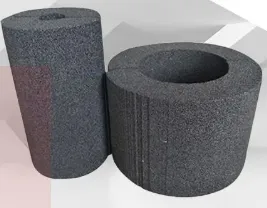
Foam glass is made from waste glass, fly ash, mica, perlite, and other glass-rich materials as the base material. It also includes additives such as foaming agents, accelerators, and modifiers. The process involves preheating, melting, foaming, cooling, and annealing to produce a porous material with closed or open pores, with a porosity rate of 80% to 95%. It can be manufactured in brick or board forms and is categorized into common foam glass and quartz foam glass based on raw materials. The matrix of foam glass is a porous foam-like glass, which is non-flammable, lightweight, strong, and has good thermal and sound insulation properties. Its application areas include building wall insulation, cold storage pipeline insulation, and ship container insulation.
Also known as porous glass or foam glass. It is a type of insulating glass with an air porosity rate of over 90%, composed of uniform air pores. Due to its air pore structure having the physical properties of borosilicate, it is used as an insulating material with features such as no air permeability, non-combustibility, no deformation, no deterioration, and no food contamination. Therefore, it is not only used as non-combustible insulating material indoors and outdoors, but also for food freezing and fermentation equipment, liquid level gauges, and floating markers. The manufacturing of foamed glass adopts the powder sintering method. In the glass powder, a foaming agent is added and mixed, heated and expanded in a heat container, and then annealed to obtain the finished product.


Applications
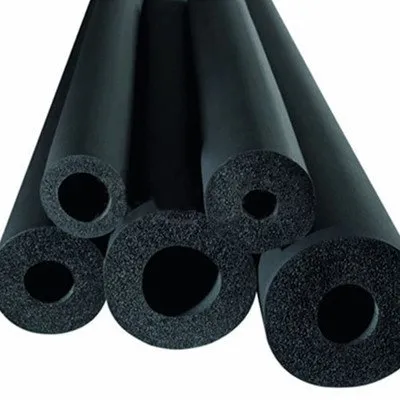
According to customer needs, cutting pipe shell, curved plate, elbow, flange, tee, variable diameter pipe and other different, shape parts, can also support the construction of adhesive, wear resistance, ma hoof fat, glass fiber cloth, metal outer cover and other auxiliary materials Mainly used in pipelines and equipment insulation.
According to customer needs, cut the plate to meet the size requirements, and supporting the construction of adhesive, grease, plaster paste and other auxiliary materials. It is mainly used in storage tank bottom, thermal Angle protection area insulation, cold and hot equipment insulation, building roof and external wall insulation.

Used for insulation and cold protection of various pipelines
When using foam glass tubes for insulation, it is necessary to apply mastic at the joints and seams of the tube shells to achieve sealing (to prevent the formation of condensate water) and fix them with iron wires or steel strips (with an interval not exceeding 200mm). When laying multiple layers of tubes, during construction, the seams must be staggered and mastic applied. Then, a special waterproof sheet should be wound or wrapped around the outside of the tube shells (two layers). It is necessary to ensure staggered seam pressing and no air bubbles, and apply mastic at the joint seams (for sealing purposes). After the mastic has completely solidified, the aluminum sheet should be wrapped.
Specification
Foam Glass: The Ultimate Building Performer
Superior Fire Resistance
Incombustible (Class A), produces no toxic smoke.
Totally Waterproof
Closed-cell structure prevents moisture absorption and eliminates rot
Exceptional Durability
Inorganic and inert; resists decay, pests, and corrosion for the life of the building.
High Strength, Low Weight
Structurally strong yet lightweight, simplifying installation and reducing load.
Efficient Thermal Insulation
Provides stable, long-term thermal performance and energy savings.
Environmentally Green
Made primarily from recycled glass, a sustainable material solution.
1. Light density, around 160 kg/m³; 2. Low thermal conductivity, below 0.058 w/m*k, with stable thermal performance; 3.Impermeable to moisture; 4. Low water absorption rate, around 0.2%; 5. Non-combustible; 6. Non-moldy and non-corrosive; 7. High strength, compressive strength ≥ 0.7 Mpa, flexural strength ≥ 0.5 Mpa; 8.Resistant to acid corrosion (except hydrogen fluoride); 9. Non-toxic, without CFC (fluorochlorocarbons) and HCFC (hydrofluorochlorates); 10Stable physical and chemical properties, stable dimensions, easy to cut