

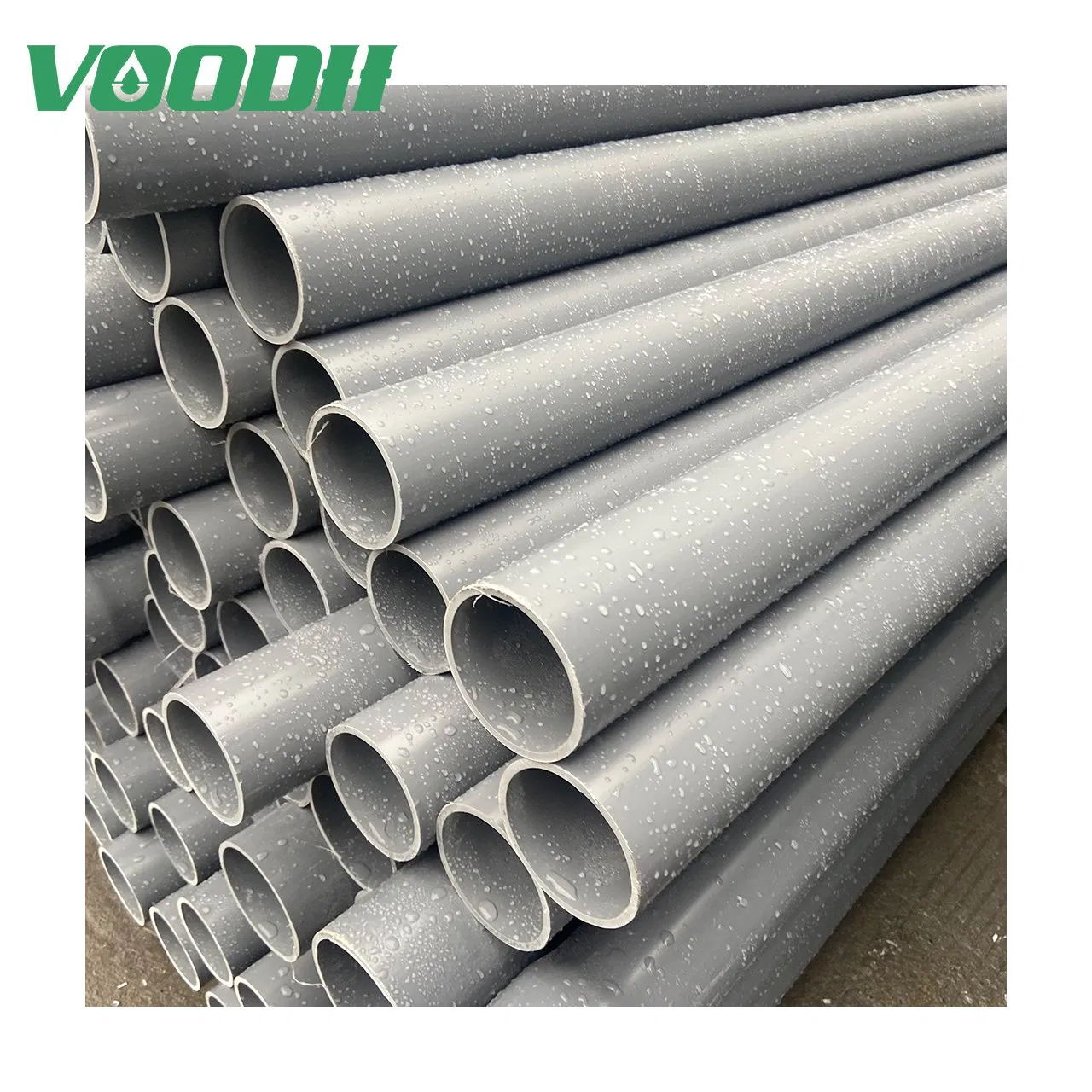


1 3/4 pvc pipe
Detailed specification for 1 3/4 pvc pipe
Review product features, application details and supporting information below. For pricing, samples or shipping questions, use the inquiry form on this page.
Overview of 1 3/4" PVC Pipe
1 3/4" PVC pipe refers to a schedule (typically Schedule 40 or Schedule 80) thermoplastic piping system made from Polyvinyl Chloride (PVC). This specific size is less common than standard nominal sizes (such as 1/2", 3/4", 1", 2") but is used in specialized applications requiring a precise intermediate bore for flow capacity, space constraints, or compatibility with specific equipment connections.
It is critical to distinguish between nominal pipe size (NPS) and outside diameter (OD):
- Nominal Size: 1 3/4" is the labeled size.
- Actual OD: For PVC pipe, the OD is fixed by the schedule, not the nominal size. 1 3/4" Schedule 40 PVC pipe has a standard OD of 2.063 inches. This is a key dimension for fitting compatibility.
Key Dimensions & Schedules
H3: Schedule 40 (Standard)
Schedule 40 is the most common schedule for general-purpose pressure and drainage applications.
- Outside Diameter (OD): 2.063 in
- Inside Diameter (ID): ~1.590 in (Wall thickness: ~0.232 in)
- Weight: Approximately 0.42 lbs per foot
- Pressure Rating: Typically rated for 400 PSI at room temperature (73°F / 23°C) for water; pressure rating decreases as temperature increases.
H3: Schedule 80 (Extra-Strength)
Schedule 80 offers a thicker wall for higher pressure and temperature tolerance.
- Outside Diameter (OD): 2.063 in (Same as Schedule 40 - fittings are compatible)
- Inside Diameter (ID): ~1.382 in (Wall thickness: ~0.341 in)
- Weight: Approximately 0.56 lbs per foot
- Pressure Rating: Significantly higher than Schedule 40, typically 800 PSI at room temperature for water.
Material Properties & Advantages
PVC is a thermoplastic polymer chosen for piping due to its robust combination of physical, chemical, and economic properties.
Core Material Characteristics
- Corrosion and Chemical Resistance: PVC is highly resistant to a wide range of acids, alkalis, salts, and many organic solvents. It does not rust, scale, or degrade from water exposure, making it ideal for water, waste, and chemical transfer.
- Strength-to-Weight Ratio: It is lightweight compared to metal piping (steel, copper), which significantly reduces labor and transportation costs and simplifies installation.
- Smooth Bore: The interior surface is exceptionally smooth, which minimizes friction losses and reduces energy costs for pumping.
- Electrical and Thermal Insulation: PVC is a non-conductor of electricity and has low thermal conductivity, preventing condensation and reducing heat loss/gain in fluid lines.
- Long Service Life: Properly installed PVC pipe has a proven service life exceeding 50 years in many applications.
Limitations to Consider
- Temperature Limitations: Maximum operating temperature for PVC is generally 140°F (60°C). Above this, the material softens and loses structural integrity. For higher temperatures, CPVC (Chlorinated Polyvinyl Chloride) is a suitable alternative.
- UV Degradation: PVC is susceptible to degradation from prolonged exposure to direct sunlight (UV radiation). Pipes used outdoors must be pigmented black or painted with UV-resistant paint to prevent embrittlement and cracking.
- Brittleness: PVC is rigid and can become brittle at low temperatures or if subjected to impact. It requires proper support to avoid mechanical stress.
Primary Applications
While 1 3/4" is a niche size, it is employed in several critical applications where its specific flow capacity and dimensions are advantageous.
Irrigation and Agriculture:
- Main and sub-main lines for field crop irrigation.
- Large residential sprinkler systems.
- Vineyard and orchard irrigation networks.
Industrial Water and Fluid Handling:
- Cooling water lines in industrial equipment.
- Pump discharge and suction lines.
- Transfer lines for mild chemicals and process water.
Pool and Spa Plumbing:
- Main circulation lines.
- Returns and suction lines for large pool systems.
- Often used in commercial pool installations.
Commercial Plumbing Systems:
- Water supply distribution for medium-scale commercial buildings.
- Drain, Waste, and Vent (DWV) systems in larger installations where 1 3/4" provides the necessary drainage capacity.
HVAC (Heating, Ventilation, and Air Conditioning):
- Condensate drain lines from large air handling units.
- Coolant lines in certain hydronic systems.
Technical Specifications & Performance
Understanding the technical performance metrics is essential for proper system design.
Pressure and Temperature Ratings
- Pressure Rating: The pressure rating is not a fixed value for the entire life of the pipe. It is calculated based on the material's hydrostatic design stress (HDS) at a given temperature.
- Schedule 40: ~400 PSI @ 73°F (23°C) for water.
- Schedule 80: ~800 PSI @ 73°F (23°C) for water.
- Always refer to the manufacturer's printed pressure rating chart for the specific pipe, as ratings decrease with increasing fluid temperature.
- Temperature Rating: The maximum continuous operating temperature for standard PVC is 140°F (60°C). Short-term surges may be tolerated, but sustained operation above this limit is not recommended and can lead to premature failure.
Flow Characteristics
The smooth interior of PVC pipe results in excellent flow efficiency. The flow rate for a 1 3/4" pipe can be estimated using standard hydraulic formulas like the Hazen-Williams equation.
- Schedule 40 ID (~1.590 in): At a velocity of 5 ft/s, the flow rate is approximately 10-11 gallons per minute (GPM).
- Schedule 80 ID (~1.382 in): The reduced bore results in a lower flow rate for the same velocity, approximately 7-8 GPM at 5 ft/s.
- These are approximations; actual flow depends on pressure loss, fittings, and overall system design.
Standards and Codes
PVC pipe is manufactured to strict industry and government standards to ensure safety and performance.
- ASTM D1785: Standard Specification for Polyvinyl Chloride (PVC) Plastic Pipe, Schedules 40, 80, and 120. This covers the physical dimensions and properties of the pipe itself.
- NSF/ANSI 61: Standard for drinking water system components, ensuring the pipe is safe for potable water use. Look for the NSF stamp if the application involves drinking water.
- Local Plumbing Codes: Always check local building and plumbing codes (e.g., IPC, UPC) for allowable applications, installation methods, and pressure ratings.
Installation Best Practices
Proper installation is critical to the performance and longevity of a PVC piping system. The primary method for joining PVC pipe is solvent welding (chemical cement).
Pre-Installation Guidelines
- Handling and Storage:
- Avoid impact and rough handling to prevent scratches, cracks, or dents.
- Store pipe in a cool, shaded area. If stored outdoors, cover it to prevent UV exposure. Do not stack it on sharp or uneven surfaces.
- Pipe Cutting:
- Use a fine-toothed saw (hacksaw, PVC saw) or a specialized pipe cutter.
- Ensure the cut is perfectly square (90 degrees) to the pipe axis.
- Remove all burrs from the inside and outside of the cut end with a deburring tool or utility knife.
Solvent Welding Procedure
This is the most common method for creating a permanent, pressure-tight joint.
- Test Fit: Dry fit the pipe and fitting to ensure a proper insertion depth. Mark the pipe at the depth of the fitting hub.
- Clean and Prime:
- Wipe the outside of the pipe and the inside of the fitting hub with a clean cloth to remove all dirt, grease, and moisture.
- Apply a purple primer (or clear depending on code) to both surfaces. Primer softens the PVC surface and prepares it for cement.
- Allow the primer to dry, but not completely (typically 5-10 seconds).
- Apply Cement:
- Apply a generous, even coat of appropriate PVC solvent cement to the pipe, and a thin coat to the fitting hub. Ensure the cement covers the full insertion depth.
- Work quickly, as the cement begins to evaporate and harden immediately.
- Join and Hold:
- Push the pipe firmly and straight into the fitting hub to the marked depth.
- A quarter-turn twist is acceptable to ensure even distribution of the cement, but avoid excessive movement.
- Hold the joint firmly for 15-30 seconds to allow the joint to set and prevent the pipe from pushing back out.
- Curing Time:
- Initial Set: The joint will be tack-free in about 2 minutes.
- Handling Strength: Wait at least 20 minutes before handling or applying pressure to the joint.
- Full Cure: Full chemical cure takes up to 24 hours. Pressure testing should not be performed until the joints have fully cured.
System Installation Tips
- Expansion and Contraction: PVC expands and contracts significantly with temperature changes (thermal coefficient is high). For long runs, incorporate expansion loops or fittings to absorb this movement and prevent stress on the pipe and joints.
- Pipe Support: Support the pipe at regular intervals (e.g., every 4-5 feet for horizontal runs, 10 feet for vertical) to prevent sagging and stress on joints. Do not overtighten straps, as this can crush the pipe.
- Threaded Connections: For connections to threaded metal fittings, use PVC male or female thread adapters. Apply PTFE tape or pipe thread sealant on the metal threads. Do not solvent weld directly to a threaded fitting.
Maintenance & Longevity
PVC piping systems are known for their low maintenance requirements, but proper care ensures their extended service life.
Routine Maintenance
- Leak Inspection: Routinely check all joints and connections for signs of leaks, which are rare in a properly installed solvent-welded system.
- Visual Inspection (Outdoors): For exposed pipe, inspect for any signs of UV degradation (fading, chalkiness, cracks), especially in areas with direct sunlight.
- System Integrity: Ensure pipe supports are secure and have not loosened. Check for signs of stress, sagging, or damage from external forces (e.g., impact from machinery).
Common Issues and Troubleshooting
- Clogging: If the pipe becomes clogged, use mechanical methods (e.g., a plumbing snake) appropriate for the pipe's internal diameter. Avoid harsh chemical cleaners, as they can damage the PVC material.
- Freezing: Water expansion when it freezes can cause PVC pipe to rupture. For pipes in unheated areas, ensure they are well-insulated or properly heat-traced.
- Joint Failure: A failed joint is almost always due to improper installation. Ensure proper priming, cement application, insertion depth, and curing time were followed.
Service Life Expectancy
When installed correctly according to manufacturer and code guidelines, and operated within its pressure and temperature limits, 1 3/4" PVC pipe is expected to last 50 years or more. Its longevity is one of its primary advantages over other piping materials.


Check buyer reviews and ratings to quickly assess product quality and service experience.
Accurate specifications, smooth surface finish, and secure packaging. Fast response and quick dispatch.
Stable tolerances and good batch consistency. Shipping was a bit slow, but support followed up promptly.
We ordered after sample approval, and the delivered goods matched the sample. Great value and we will reorder.
Documentation in English was complete and easy for overseas coordination. Suggest adding more testing reports.
Plenty of stock, reliable lead times, and quick after-sales response. Overall a great cooperation experience.
Transparent pricing and reasonable MOQ, suitable for project-based sourcing. Please add more application cases.
Compare similar items from the same supplier to simplify sourcing and bundled procurement.
pvc drainage pipe with holes
pvc pipe supplies near me
1 3/4 pvc pipe
remove pvc glue from pipe
Pandora Irrigation Drip Tape Agriculture PE Self Compensated System
Send your message to this supplier
Include product specification, quantity, destination port and packing needs to receive a faster and more accurate quotation.
Benchmark comparable offers in the market and evaluate more sourcing options.
pvc pipe bonding
pvc pipe brace
pvc pipe as fence posts
pvc pipe ball valve
pvc pipe antenna mast