
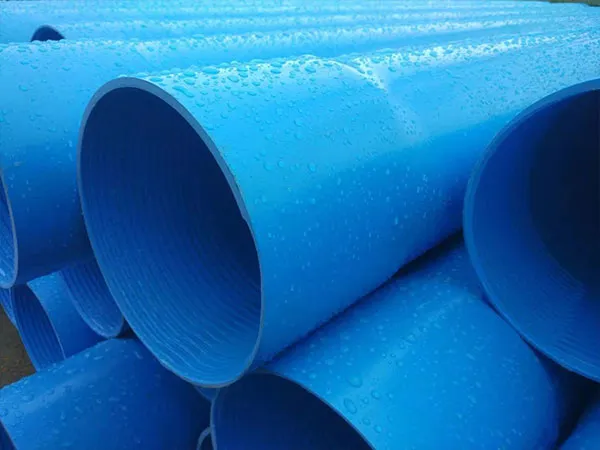


4 1/2 pvc pipe
Detailed specification for 4 1/2 pvc pipe
Review product features, application details and supporting information below. For pricing, samples or shipping questions, use the inquiry form on this page.
Understanding 4 1/2" PVC Pipe: A Technical Overview
4 1/2" PVC (Polyvinyl Chloride) pipe refers to a nominal pipe size (NPS) commonly used in large-scale water distribution, drainage, and industrial fluid handling systems. The “4 1/2” designation is a standardized nominal dimension that approximates the internal diameter—actual outside diameter (OD) is larger and standardized to ensure compatibility with fittings across manufacturers.
Key Terminology Clarification
- Nominal Pipe Size (NPS): A standardized North American designation for pipe sizes; it does not equal the actual physical dimensions.
- Schedule: Refers to wall thickness. Common schedules for 4 1/2" PVC include Schedule 40 (standard) and Schedule 80 (heavy-duty).
- Outside Diameter (OD): Physical external measurement; fixed per ASTM standards for a given NPS and schedule.
Note: For 4 1/2" NPS PVC Schedule 40, the actual OD is 4.500 inches, making it a true “4 1/2” OD—but this varies by schedule and standard.
Material Properties of PVC Pipe
PVC is a thermoplastic polymer known for durability, chemical resistance, and ease of installation. Its performance in 4 1/2" pipe applications is governed by the following characteristics:
Physical & Chemical Attributes
- Corrosion Resistance: Unaffected by soil chemicals, electrolysis, and most industrial fluids—ideal for buried or exposed lines.
- Lightweight: Approximately 1/5 the weight of ductile iron or steel, reducing transport and handling costs.
- Smooth Interior Surface: Lowers friction losses and enhances flow efficiency compared to metal pipes.
- Pressure Rating: Depending on schedule and temperature, 4 1/2" PVC can sustain working pressures from 150 psi to over 300 psi at 73°F (23°C).
- Temperature Limitation: Maximum service temperature ~140°F (60°C); prolonged exposure above this can degrade mechanical integrity.
- Life Expectancy: Design life exceeds 50 years in properly designed systems.
Standard Specifications for 4 1/2" PVC Pipe
Compliance with ASTM and NSF standards ensures quality, safety, and interchangeability.
Common Standards
- ASTM D1784: Standard specification for PVC compound.
- ASTM D3034: Standard for PVC pipe up to 48" diameter (includes 4 1/2").
- NSF/ANSI 61: Certifies materials for potable (drinking) water use.
- AWWA C900: Applies to pressure pipe for water mains—often governs 4 1/2" PVC in municipal systems.
Typical Dimensions & Pressure Ratings
*Pressure ratings assume 73°F ambient temperature; derating applies at higher temperatures.
Primary Applications of 4 1/2" PVC Pipe
This size bridges mid-range distribution needs and is critical in infrastructure projects:
- Municipal Water Distribution: Used in mains, trunk lines, and service connections where moderate pressure and high flow capacity are required.
- Wastewater and Storm Drainage: Gravity-fed systems benefit from smooth interiors and large diameters that minimize clogging.
- Industrial Process Piping: Transports non-corrosive chemicals, slurries, or coolant water in manufacturing plants.
- Agricultural Irrigation: Large-scale crop irrigation networks rely on PVC for reliability and low maintenance.
- HVAC Systems: Serves as condenser water lines or chilled water loops in commercial buildings.
Installation Guidelines for 4 1/2" PVC
Proper installation ensures longevity, leak-free joints, and system performance.
1. Pipe Handling & Storage
- Store off the ground on level, flat surfaces to prevent warping.
- Avoid exposure to direct sunlight during storage and installation (UV degrades PVC over time); use opaque or UV-stabilized pipe if exposed long-term.
- Handle with care to avoid impact damage or gouges—use rope slings or carts, not hooks.
2. Jointing Methods
- Solvent Welding (Gluing): Most common method for pressure systems.
- Clean surfaces with primer.
- Apply PVC solvent cement evenly to hub and spigot.
- Insert and rotate 1/4 turn, hold for 30 seconds.
- Allow full cure per manufacturer’s instructions (typically 24 hours before pressure testing).
- Bell & Spigot with Gaskets: Used in gravity sewer applications; uses EPDM or rubber gaskets for flexible, leak-proof joints.
- Mechanical Couplings: Required where disassembly may be needed; ideal for repairs or temporary connections.
3. Trenching & Bedding Requirements
- Minimum trench width: 24 inches for 4 1/2" pipe (allows proper compaction).
- Bedding material: Select granular backfill (e.g., sand or gravel) free of sharp rocks.
- Compaction: Backfill in 6-inch lifts; avoid heavy equipment over the pipe until properly buried.
- Depth: Typically 3–5 feet for municipal systems, depending on traffic loads and frost lines.
4. Expansion & Flexibility
- PVC expands/contracts with temperature changes—allow for thermal movement every 100 feet via expansion loops, offsets, or flexible couplings.
- Never restrain pipe rigidly across long runs without accommodating thermal expansion.
Maintenance Best Practices
PVC requires minimal upkeep, but proactive measures extend service life:
- Pressure Testing: Perform initial hydrostatic test at 1.5× working pressure for 2 hours to verify joint integrity.
- Leak Inspection: Monitor for surface cracks, joint seepage, or pressure drops.
- Cleaning: Use line pigging or high-pressure jetting to remove deposits in water mains; avoid abrasive cleaners.
- UV Protection: Apply paint or UV-resistant jacketing to exposed sections.
- Root Intrusion: In sewer lines, install root barriers or schedule periodic root cutting.
Selecting the Right Schedule
Choosing between Schedule 40 and Schedule 80 depends on operational demands:
When to Use Schedule 40
- Municipal water distribution under normal pressure (<150 psi)
- Storm sewers and drainage systems
- Gravity-fed wastewater lines
- Applications where cost efficiency is prioritized
When to Use Schedule 80
- High-pressure industrial processes (>150 psi)
- Systems subject to frequent pressure surges
- Corrosive environments requiring thicker walls
- Critical infrastructure needing higher safety margins
Pro Tip: Always confirm system pressure requirements, including surge pressures, before specifying wall thickness.
Safety & Compliance Considerations
- Always comply with local plumbing and building codes (e.g., UPC, IPC).
- For potable water, ensure NSF/ANSI 61 certification.
- Workers must wear gloves, eye protection, and respirators when solvent cementing in confined spaces.
- Never use PVC in high-temperature steam lines or fire sprinkler systems unless specifically rated and approved.
Conclusion
4 1/2" PVC pipe is a versatile, reliable, and cost-effective solution for medium-to-large-scale fluid conveyance systems. Its combination of corrosion resistance, smooth flow characteristics, and ease of installation makes it ideal for water, wastewater, industrial, and agricultural applications. By adhering to ASTM/NSF standards, selecting appropriate schedules, and following proper installation and maintenance protocols, engineers and contractors can ensure decades of dependable performance.
If you have a specific application (e.g., pressure rating requirement, burial depth, fluid type), share details for a tailored specification and recommendation.


Check buyer reviews and ratings to quickly assess product quality and service experience.
Accurate specifications, smooth surface finish, and secure packaging. Fast response and quick dispatch.
Stable tolerances and good batch consistency. Shipping was a bit slow, but support followed up promptly.
We ordered after sample approval, and the delivered goods matched the sample. Great value and we will reorder.
Documentation in English was complete and easy for overseas coordination. Suggest adding more testing reports.
Plenty of stock, reliable lead times, and quick after-sales response. Overall a great cooperation experience.
Transparent pricing and reasonable MOQ, suitable for project-based sourcing. Please add more application cases.
Compare similar items from the same supplier to simplify sourcing and bundled procurement.
pvc exhaust pipe for furnace
4 1/2 pvc pipe
pvc t pipe
acrylic pvc pipe
pvc pipe dog fence
3 4 pvc pipe
Q235 Black Carbon ERW Weld Steel Pipe
Gi Pipe Hot DIP Galvanized Steel Pipe and Tube for Sales
Pre-Galvanized Square Rectangular Pipe and Tube
Welded Carbon Fiber Tube Square with Ce Certification
Send your message to this supplier
Include product specification, quantity, destination port and packing needs to receive a faster and more accurate quotation.
Benchmark comparable offers in the market and evaluate more sourcing options.
pvc pipe bonding
pvc pipe brace
pvc pipe as fence posts
pvc pipe ball valve
pvc pipe antenna mast