| Material | PE |
| Kind | Thermosetting Plastics Pipe |
| Water Absorption | <0.01% |
| Contraction Percentage | <0.4% |
| Tensile Strength | 3.9MPa |
| Connect Way | Butt Welding, Socket, Electrofusion |
| Pressure Rate | Pn16, Pn12.5, Pn10, Pn8, Pn6 |
| SDR | SDR11, SDR13.6, SDR17, SDR21, SDR26 |
| Application | Water Supply, Drainage, Irrigation |
| Length | 5.9m, 11.8m, 12m |
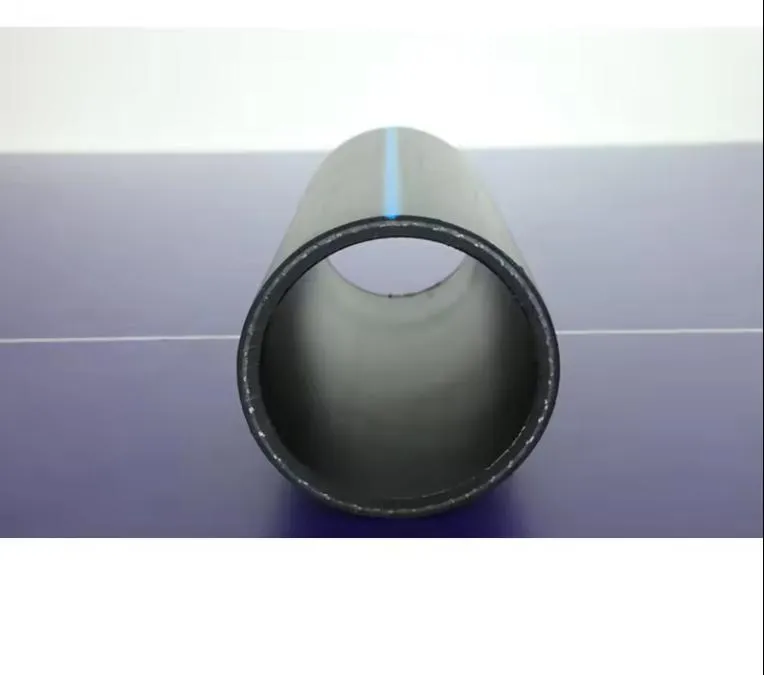
| Color | Black with Blue Strip |
| Raw Materials | Polyethylene PE100 |
| Transport Package | Nude Cargo |
| Specification | 1000MM |
| Trademark | Kangyu |
| Origin | Linyi, Shandong Province, China |
| HS Code | 39172100 |
| Production Capacity | 500, 000t/Year |
Product Description

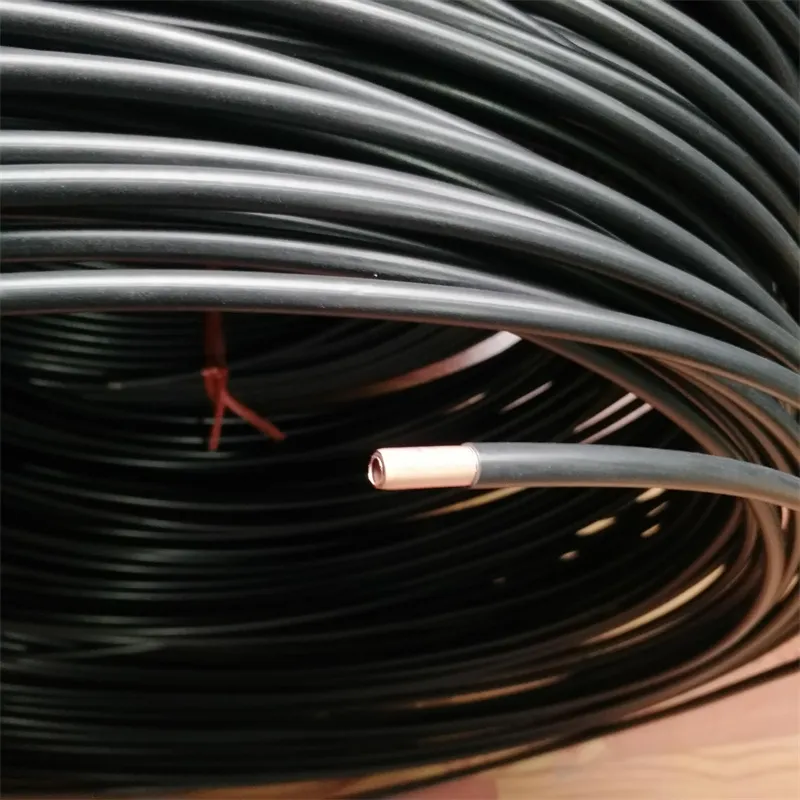
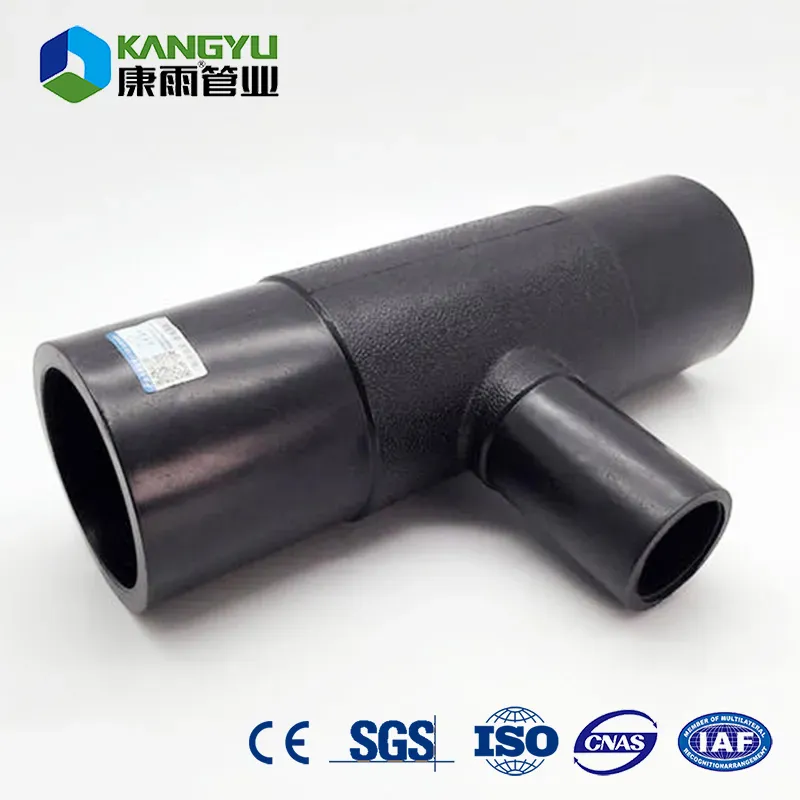
HDPE pipe is a type of flexible plastic pipe used for fluid and gas transfer and is often used to replace ageing concrete or steel mains pipelines. Made from the thermoplastic HDPE (high-density polyethylene), its high level of impermeability and strong molecular bond make it suitable for high pressure pipelines. HDPE pipe is used across the globe for applications such as water mains, gas mains, sewer mains, slurry transfer lines, rural irrigation, fire system supply lines, electrical and communications conduit, and stormwater and drainage pipes. Plastic pipes are developing steadily, and PE pipes, PP-R pipes, and UPVC pipes all occupy a place. Among them, the strong development momentum of PE pipes is the most eye-catching. HDPE pipes are used in a wide range of fields. Among them, water supply pipes and gas pipes are its two largest application markets.
Raw materials
PE resin is polymerized from the monomer ethylene. Due to the different polymerization reaction conditions such as pressure and temperature during polymerization, resins of different densities can be obtained, so there are high-density polyethylene, medium-density polyethylene and low-density polyethylene. points. When processing different types of PE pipes, according to their application conditions, different resin grades are selected, and the requirements for extruders and molds are also different.
Internationally, the materials of polyethylene pipes are divided into five grades: PE32, PE40, PE63, PE80, and PE100, while the materials used for gas pipes and water supply pipes are mainly PE80 and PE100. There is no classification of special materials for polyethylene pipes in my country, which makes it difficult for domestic polyethylene gas pipe and water supply pipe manufacturers to choose raw materials, and also brings a lot of hidden dangers to the use of polyethylene pipes.

Product Advantage

1.Good hygiene performance: When processing PE pipes, no heavy metal salt stabilizers are added, the material is non-toxic, has no scaling layer, and does not breed bacteria, effectively solving the secondary pollution of urban drinking water.
2.Excellent corrosion resistance: Except for a few strong oxidants, it can withstand erosion from various chemical media; No electrochemical corrosion.
3.Long service life: PE pipes can be safely used for more than 50 years under rated temperature and pressure conditions.
4.Good impact resistance: PE pipes have good toughness and high impact strength, and heavy objects can directly press over the pipes without causing them to rupture.
Product Size list
Pressure
OD
(mm)
PN0.6MPa SDR 26
Thickness
(mm)
PN0.8MPa SDR 21
Thickness
(mm)
PN1.0MPa SDR 17
Thickness
(mm)
PN1.25MPa SDR 13.6
Thickness
(mm)
PN1.6MPa SDR 11
Thickness
(mm)
63
3.7
4.7
5.8
75
4.5
5.6
6.8
90
4.3
5.4
6.7
8.2
110
4.2
5.3
6.6
8.1
10.0
125
4.8
6.0
7.4
9.2
11.4
140
5.4
6.7
8.3
10.3
12.7
160
6.2
7.7
9.5
11.8
14.6
180
6.9
8.6
10.7
13.3
16.4
200
7.7
9.6
11.9
14.7
18.2
225
8.6
10.8
13.4
16.6
20.5
250
9.6
11.9
14.8
18.4
22.7
280
10.7
13.4
16.6
20.6
25.4
315
12.1
15.0
18.7
23.2
28.6
355
13.6
16.9
21.1
26.1
32.2
400
15.3
19.1
23.7
29.4
36.3
450
17.2
21.5
26.7
33.1
40.9
500
19.1
23.9
29.7
36.8
45.4
560
21.4
26.7
33.2
41.2
50.8
630
24.1
30.0
37.4
46.3
57.2
710
27.2
33.9
42.1
52.2
800
30.6
38.1
47.4
58.8
900
34.4
42.9
53.3
1000
38.2
47.7
59.3
1200
45.9
57.2