
One. Can ceramic tiles be used for bathroom floors?
Inner wall tiles can be used for bathroom floors, provided the bathroom floor has good waterproofing, which will not cause any problems.
Interior wall tiles are a type of ceramic tile primarily used for interior wall decoration. Interior wall tiles consist of three components: the body, the lower glaze layer, and the upper glaze layer. The absorption rate of the body is generally below 3%, the glaze weight of the lower glaze layer is 40-60 grams, and the glaze weight of the upper glaze layer is 90-160 grams. In general, the higher the firing temperature and the larger the glaze weight of the upper glaze layer, the better the brightness and smoothness of the ceramic tile.
Two. What type of tiles are best for bathroom floors?
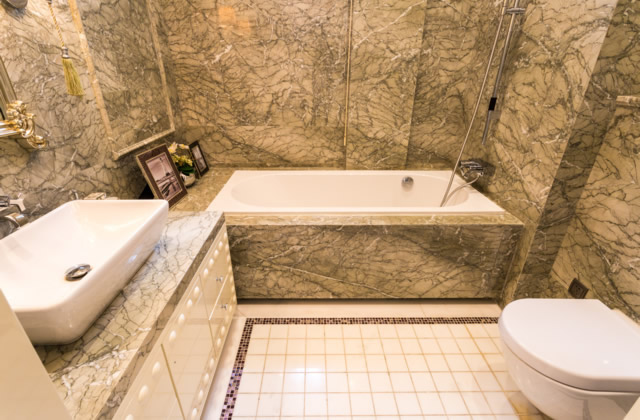
1、Choose tiles with low water absorption rate.
Bathrooms are frequently exposed to water, which is why it's important to select tiles with low water absorption rates to minimize issues like cracking and expansion. When purchasing tiles, it's essential to check their water absorption rate. If the tile's label doesn't specify the absorption rate, you can place a drop of water on the back of the tile and observe how quickly it spreads. Tiles with slower water absorption rates indicate higher quality.
2. Select tiles with high density.
When selecting tiles for bathrooms, it is also important to choose tiles with high density and hardness. Tiles with high density and hardness are less prone to damage and are easier to clean, making them ideal for bathroom applications. When selecting tiles, you can observe the surface for irregularities and pinholes. You can also tap the tiles to listen for a clear and resonant sound, which indicates a high-density and high-quality tile.
3、Degree of glazing on brick surfaces
When selecting tiles for bathrooms, it is also necessary to observe the glazing level of the tiles. You can use a hard object to scratch the tile surface. If scratches appear, it indicates that the glazing is thin. Tiles with thin glazing are prone to staining and difficult to clean after the glaze is polished, and they are not suitable for use in humid and sealed environments like bathrooms due to their lower safety and cleaning performance.
Three. Ceramic tiles for bathroom floors.Bricklaying Precautions
1、Grouting issues
The grout joints in bathroom tiles should not be too small. Small grout joints can reduce the lifespan of the tiles, as the tiles may crack due to thermal expansion and contraction.
2、Joint filling issues
Currently, many workers begin filling the joints immediately after installing tiles in bathrooms. This practice is highly inappropriate because the tiles have not fully dried. During the filling process, the tiles are prone to loosening, which can lead to detachment and create safety hazards in the long run.
3、Before tiling, the surface must be cleaned.
Some irresponsible construction teams fail to remove existing putty powder before laying bathroom tiles. This practice poses significant safety risks. Because the cement has a high strength, the putty powder cannot effectively hold the cement, which can lead to tile detachment.
4、Protecting the tiled surface after installation.
When laying tiles, ensure proper protection to avoid scratching or contaminating the tile surface. Do not walk on un-cured tiles, as this can damage them.