
One、How to apply exterior bricks beautifully
1、Substrate preparation
During structural construction, the verticality and flatness of the exterior wall should meet the required standards. Concrete protruding from the wall should be planed, and concave areas should be filled with 1:3 cement mortar. When the filling thickness or vertical deviation exceeds 35mm, technical measures such as installing wire mesh should be taken to correct the issue.
2、Apply interface treatment agent
Mix the interface treatment agent with water at a ratio of 1:4 to create a thick paste and thoroughly mix. Then, apply directly or with a roller, with a coating thickness of approximately 2-3mm. After applying the interface treatment agent to the wall for about 5-15 minutes (depending on the temperature), you can proceed with the plastering.
3、 Laying bricks in a staggered pattern.
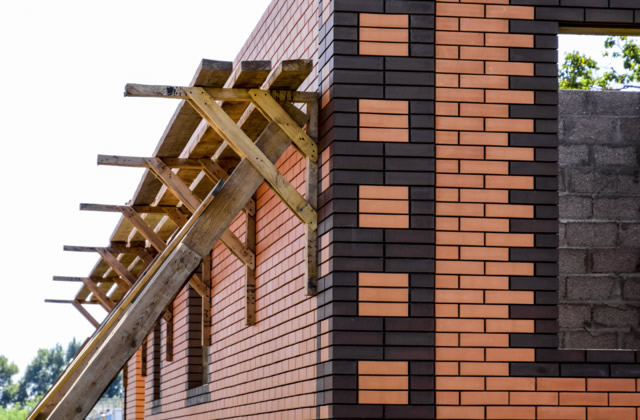
On the plastered substrate surface, first mark out vertical and horizontal control lines, and then, based on the specifications and layout of the exterior wall bricks, mark out the control lines for the facing bricks.
4、Adhering exterior wall bricks
Use a trowel to apply cement behind the exterior wall bricks, ensuring it fills all gaps between the bricks and the substrate, and then spread it evenly across the wall according to the grid lines.
5、Joint Filling
There are two methods for filling gaps:
(1) Applying mortar with a spoon: Place the cement mortar (sand:cement = 1:2) on a mortar board, spread it to form a mortar layer approximately 5mm thick, and then divide it into 5mm x 5mm strips using a spoon. Insert the strips into the brick joints, and smooth the excess mortar from the brick surface, minimizing the contact of cement with the brick surface.
(2) Large-Area Joint Filling: First, wet the brick surface with water and allow it to dry. Then, apply the cement mortar with the specified ratio to fill the joints. After the brick mortar has partially set, use a rubber scraper to remove the mortar from the brick surface. Then, dampen the surface with a sponge and wring it out thoroughly, ensuring that no traces of cement remain.
6、Joint Filling
The brick joint effects can be: convex, concave, or flush with the brick surface. Different brick joint designs can achieve various decorative effects. After completing the joint filling, use tools to create the desired effect, and then clean the surface with a clean cloth.
7、Cleaning and Maintenance
After the filling is complete (the specific time may vary depending on weather conditions, but generally around 30 hours), thoroughly clean the brick surface with water from top to bottom. Before the exterior bricks are completely dry, do not perform any grinding, as this will damage the exterior bricks.
Two. important considerations for wall brick laying.
Carefully inspect the quality of the exterior wall bricks before installation: Verify that the exterior wall tiles meet the technical specifications outlined in the purchase contract and relevant national standards.
Do not mix and stack different types of exterior wall tiles: Tiles should be stacked according to the manufacturer's specifications, size, and color.
Exterior wall bricks should be soaked in water before use.
During structural construction, the wall surface should be as close as possible to the standard for plaster walls, ensuring a smooth and plumb finish. When the substrate is a brick wall, it is essential to thoroughly clean the brick surface, removing any remaining mortar, dust, oil, or other debris.