
I. Color difference caused by pollution
1. Causes
- Stone has a tendency to absorb dust particles from the air.- These particles enter the pores of the stone, causing a change in the stone's surface reflection rate, which can manifest as a darkening or aging of the stone's color.
2、Treatment method
Surface dust can be removed with a dust broom. Deep-seated contamination requires professional cleaning.
3. Preventive measures
Maximize the filling of gaps on the stone surface to prevent the ingress of air, water, and dust, reducing future cleaning difficulties.
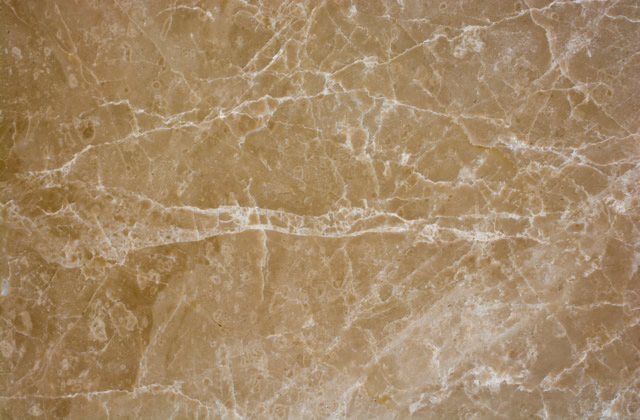
Two. Color variations caused by water penetration.
1. Causes
The presence of voids on the stone surface, where water molecules fill the spaces, or where water molecules surround the stone's mineral particles, causes a change in light reflection, resulting in some angles appearing brighter and others appearing darker.
2、Treatment method
The simplest solution for water penetration is to allow it to dry naturally. If there is any residue, such as water stains, simply clean and then allow it to dry.
3. Preventive measures
Remove water stains and apply oil-based protection (note: water-based protection is not recommended).
III. Color variations caused by mineral reactions
1、Causes
Limestone is a complex material composed of various minerals. It can react with water, air, and pollutants, primarily water. For example, some types of limestone may absorb water and cause yellowing or rust.
2、Solution/Treatment Method
Remove internal contamination, discoloration, and rust.
3、Preventive measures
Ensure proper protection of the stone surface to prevent water penetration.
Four. Color difference caused by aging and wear.
1、Causes
After stone surfaces age and wear, they become rough, leading to uneven changes in light reflection and, consequently, color variations.
2、Treatment method
- Slight color variation: can be coated with coloring and protective materials.- Severe abrasion: requires grinding and restoration.
3. Preventive measures
Apply a crystalline sealing and glazing treatment to the stone surface to enhance its abrasion resistance and protect the stone's natural surface layer as much as possible.
Five. Color variations caused by improper coloring.
1、Causes
Staining, dyeing, and tinting stone are also major causes of color variations. While staining can be used to correct color variations, improper application due to factors such as staining materials and construction methods can result in unintended color changes, ultimately altering the original color. Furthermore, after staining, color variations can occur due to physical and chemical principles, leading to changes in the staining material.
2、Recommended solutions
In this situation, the best approach is to combat the issue with a similar solution, including re-coloring, enhancing, and even changing the color.
3. Preventive measures
Scientific coloring, professional coloring. Apply surface protection after coloring.
VI. Color differences caused by improper adhesion
1、Causes
Will patching cause color variations? Most people have likely encountered this. The color variations here are not due to differences between the stones themselves, but rather due to patching performed to achieve a seamless finish, which has resulted in a problem. This is because the composition of the adhesive differs significantly from that of the stone, leading to different aging rates. The adhesive gradually darkens, creating a noticeable contrast with the surrounding stone.
2、Recommended solutions
- For minor color variations, it is not recommended to address them. For significant color variations, it is necessary to fill the gaps and apply adhesive again.
3. Preventive measures
Since the color of the colloidal material tends to darken, the color of the material should be slightly lighter than the stone when mixing.