
One: Which is better, a kitchen sink dishwasher or an integrated dishwasher?
1、Dishwasher
Dishwashers for sinks don't require repeated bending, making them easy and convenient to use. After meals, simply rinse and place the dishes in the dishwasher, and press the start button. This is particularly beneficial for people with back or waist problems, or those who are older. Additionally, fruits and vegetables can also be placed in the dishwasher to remove pesticide residue, which is a great convenience for those who prefer a more relaxed approach. However, the capacity of dishwashers for sinks is relatively small and is best suited for households with few people and small apartments. During dishwashing, there is a risk of splashing water, which then needs to be cleaned up.
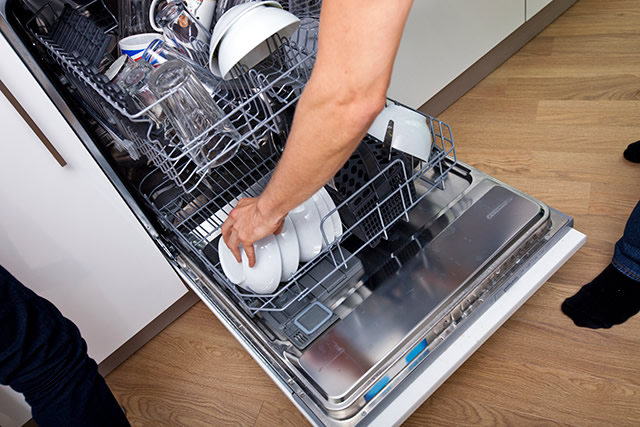
2、Built-in Dishwasher
The built-in dishwasher has a large capacity and is suitable for families or larger homes. Similar to pots used for stir-frying, dishes can be easily loaded into the built-in dishwasher. Additionally, built-in dishwashers do not splash water like traditional dishwashers, making cleanup easier. However, since they are installed under the sink cabinet, users must bend repeatedly while washing dishes, which may not be comfortable for the elderly or those who prefer a more relaxed approach.
Two. Are dishwashers and sinks a good combination?
Advantages of a sink and dishwasher
1、Easy installation, space-saving.
Compared to built-in dishwashers, countertop dishwashers are a better choice for homes that have already been renovated, as they only require modifications to the existing countertop. This eliminates the need to alter cabinets and plumbing.
On the other hand, a sink-type dishwasher consists of a sink and a dishwasher, and can be used to replace a traditional kitchen sink. Unlike built-in dishwashers and countertop dishwashers, a sink-type dishwasher does not occupy cabinet space or countertop space.
2、Easy to operate
The countertop dishwasher and sink basin have the same height, allowing for vertical placement and retrieval of dishes, unlike built-in dishwashers that require bending to access dishes from the bottom of the cabinet. Therefore, countertop dishwashers offer a better user experience compared to built-in dishwashers.
3. Clean fruits and vegetables
A sink-style dishwasher has a unique cleaning function that is not found in other dishwashers: the ability to clean fruits and vegetables. This "fruit and vegetable cleaning" function allows the dishwasher to clean both vegetables and fruits. Some sink-style dishwashers can even be used to clean crawfish. Compared to other dishwashers, sink-style dishwashers offer a better user experience for this specific function, making cooking more convenient.
Disadvantages of sink-type dishwashers
1、Small capacity
The countertop dishwashers commonly available on the market typically have a limited capacity, often only accommodating 6 to 7 sets of dishes. This makes countertop dishwashers unsuitable for larger families or households. The space-saving advantage of countertop dishwashers also highlights their small capacity limitations.
2、Low cost-effectiveness
From a purely price perspective, countertop dishwashers are generally more expensive than built-in dishwashers. Furthermore, a crucial point is that countertop dishwashers have smaller capacities but are sold at a higher price than built-in dishwashers with larger capacities, making them a poor value for money.
3、Cleaning performance is generally poor.
The primary function of a dishwasher is to clean dishes. The cleaning performance of a countertop dishwasher is inferior to that of an inset dishwasher. Countertop dishwashers have limited cleaning functions due to their construction and space constraints. The spray arms can only be distributed in the lower and central areas, which limits their ability to clean dishes from all angles and at multiple perspectives, resulting in a lower level of cleanliness compared to inset dishwashers with spray arms that can be distributed more comprehensively.
4、 Drying performance is poor.
When evaluating a dishwasher, it's important to consider not only whether it effectively cleans dishes but also its drying performance. Dishwashers can be categorized based on their drying methods, which include residual heat/condensation drying, heat exchange drying, and air/heat drying with open door. Dishwashers with a sink-integrated design typically use residual heat/condensation drying or heat exchange drying, while only a few high-end models utilize air/heat drying with an open door. In terms of drying effectiveness, dishwashers with an integrated sink generally perform better than those with a sink-integrated design.