
One. Can a shower room be used for underfloor heating?
A shower room can be equipped with underfloor heating.
Currently, the area of shower rooms is generally small, and the cost of underfloor heating is relatively low. Furthermore, underfloor heating provides even heat distribution, making the space more comfortable to use. Additionally, installing underfloor heating in shower rooms can effectively prevent the growth of mold and mildew on the floor, keeping the shower room clean and hygienic.
II. How to install underfloor heating in a shower room
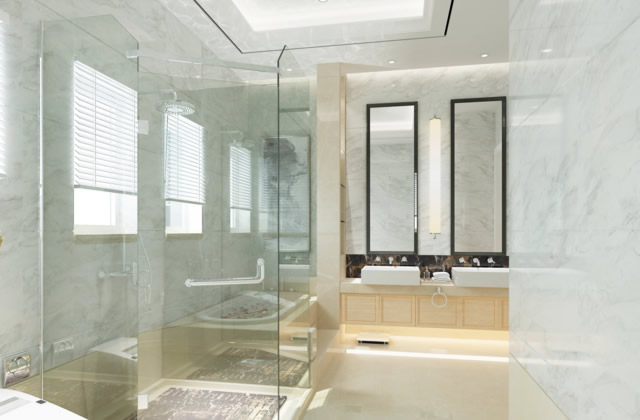
1、Lay down wire mesh
Lay a wire mesh on top of the polyethylene vacuum-plated aluminum film. Securely fasten the wire mesh together by tying it with binding straps. The wire mesh should overlap and be securely fastened.
2、Lay down heating cables
Heat-resistant cables must be laid on the steel mesh according to the design drawings, with spacing tolerances of ≤±10mm, and a minimum bending radius of 5 times the cable diameter. The layout of heat-resistant cables should be neat and straight. Heat-resistant cables must not be subjected to impact.
3、Heat-resistant cable testing
After the heat-resistant cable installation is complete, inspect the installation according to the drawings to ensure it meets the design requirements. Use a multimeter and a frequency meter (500M) to measure the nominal resistance and insulation resistance of each cable, ensuring that the heat-resistant cable has no open-circuit or short-circuit conditions.
Three. important considerations for installing underfloor heating in shower rooms.
1、Perform proper waterproofing treatment.
A shower room is the area in a home with the highest water usage and humidity, so it is crucial to conduct thorough waterproofing tests and implement appropriate measures. This directly affects the overall quality and success of the underfloor heating installation. Waterproofing in a shower room is not limited to the floor; waterproofing at the entrance to the shower room should also be carefully considered.
2、Proper temperature control
Underfloor heating is a heating system that operates from the bottom up. The flooring materials in a shower room also tend to be numerous, and these materials significantly affect the radiant heating capacity of the shower room floor. Therefore, when designing the heating for a shower room, it should be designed according to a temperature range of 20°C to 24°C.
3. Install separate temperature controllers
In small shower rooms, some people choose to share a thermostat with other rooms to save costs. However, shower rooms are typically the wettest areas and require the most water. If a single thermostat is used, the underfloor heating system must first evaporate the moisture from the shower room before starting to heat, while the main room starts heating immediately. This results in a lower temperature in the shower room.