
One. Centralized Heating
Principle: Utilizing city-wide, district-wide, or large-scale centralized heating systems as the heat source, this is the primary method for urban residential heating. Suitable for most residential communities within a city.
Advantages: The technology is relatively mature, safe and reliable, has a relatively low price, and enables 24-hour heating.
Disadvantages: The heating time and temperature cannot be controlled, and there is no heat source during both the heating and non-heating periods.
II. Radiant Floor Heating for Floors
Principle: Low-temperature radiant floor heating utilizes heating pipes embedded beneath the floor to heat the floor, then radiates heat evenly into the room to achieve heating. Suitable for high-end apartments.
Advantages: Uniform temperature distribution on the floor, high comfort level, and improved energy efficiency.
Disadvantages: Laying wooden flooring can lead to cracking, and the temperature should not be set too high, otherwise it will significantly reduce the lifespan of the conveying pipes.
III. Household Electric Water Heaters
Principle: Household electric boilers utilize electric power for heating, typically used during residential renovations.
Advantages: Small footprint, easy installation, convenient operation, and high comfort level.
Disadvantages: Requires significant initial investment and also has relatively high operating costs.
IV. Electric Film Heating
Principle: Utilizing electricity as the energy source, a pure resistive heating element is created by printing specially formulated conductive ink between two layers of polyester films. Most applications are for ceiling-mounted installations. Suitable for high-end apartment renovations.
Advantages: Clean energy, no pollution, and temperature control via thermostat.
Disadvantages: Slow heating rate, insufficient power supply, and high energy consumption.
V. Household Central Air Conditioning System
Principle: Utilizes municipal electricity or natural gas to provide heating via vents. Suitable for villas or high-end apartments.
Advantages: High grade, excellent appearance, and high comfort level. Temperature and time can be pre-set.
Disadvantages: Requires significant initial investment and also has relatively high operating costs.
Six. Individual Room Wall-Mounted Gas Heating
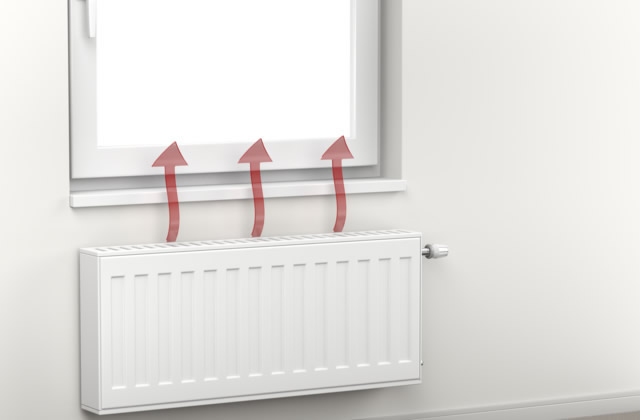
Principle: Installing a wall-mounted boiler in the kitchen or on the balcony to achieve heating by burning natural gas, with indoor piping and radiators connected to the boiler. This typically allows for simultaneous supply of both heating and hot water.
Advantages: Flexible heating time setting, allowing for on-demand activation, and the ability to adjust the temperature within a certain range for each room.
Disadvantages: Short service life, requiring regular updates and maintenance; significant noise during use; and potential for air pollution.