
Can structural adhesive be used for waterproofing and sealing leaks?
1、Structural adhesives cannot be used for waterproofing and sealing. The basic requirements for waterproofing materials are that they must possess both high strength and flexibility, enabling them to withstand temperature and other changes while maintaining excellent waterproofing performance. Furthermore, they must exhibit enhanced adaptability to the environment.
2. However, structural adhesives exhibit high stiffness and are highly sensitive to structural deformation. They also lack weather resistance and require strict temperature and environmental control. These adhesives are primarily suitable for bonding materials such as metals, ceramics, and rubber.
3. Waterproofing performance is a very important property. If waterproofing is not done properly, it will affect the daily lives of the homeowner and their neighbors. Therefore, it is particularly important to carefully select appropriate waterproofing materials during renovation. When performing waterproofing, it is also important to choose reliable and trustworthy contractors to prevent unnecessary problems in the future.
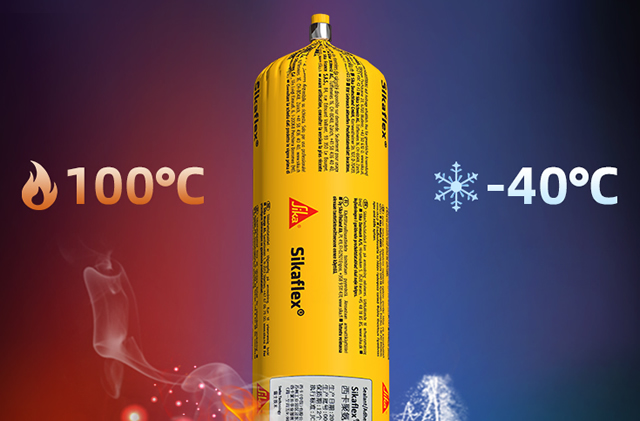
What is the waterproof performance of structural adhesive?
Structural adhesives do not possess waterproofing capabilities. This is because structural adhesives are inherently rigid building adhesives with poor weather resistance. Changes in temperature and humidity significantly affect their performance, and their expansion and contraction properties do not provide any waterproofing effect. However, they exhibit high adhesion strength and excellent glass adhesion, making them easy to apply.
Applications of structural adhesives
1、Structural adhesives come in various types, each with different applications. One of the most widely used is architectural structural adhesive. This adhesive is used for bonding carbon fiber fabrics, soil anchoring, and crack repair, functioning as a bonding agent.
2. The structural adhesive boasts high strength, resistance to detachment, impact resistance, and simple construction processes. It is primarily used for reinforcing, anchoring, bonding, and repairing structural components, such as bonding steel, bonding carbon fiber, mechanical anchoring, crack repair and sealing, hole repair, nail embedding, surface protection, and concrete bonding.