
What types of grout are available?
1White cement-based joint sealant
This is the most commonly used and traditional method, and also the most affordable, but it also has the most obvious drawbacks: the gaps will turn black within a few months, which is very unsightly.
2Multi-component grout
Focusing on products from foreign manufacturers, these offer a wide range of colors, excellent stability (no sagging or shrinkage), high hardness, and resistance to discoloration. However, a drawback of these joint fillers is their rough surface finish, which can still darken over time. They also require complex application, are expensive, and are limited to joints wider than 3mm. They cannot be used on walls and are prone to dripping.
3Dual-component oil-based sealant
It is also sometimes referred to as ceramic glue, and is derived from plastic mortar. Its advantages include not collapsing and having a hard, colorful surface. However, this type of jointing agent has disadvantages such as complex operation, requiring two-part mixing and filling, and must be applied with tile edges covered with paper tape to avoid contamination and difficulty in cleaning from hands and clothes. It is also brittle and prone to cracking and breaking.
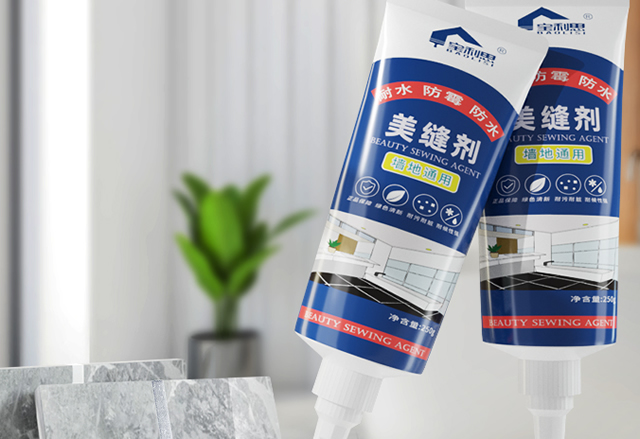
4Single-component water-based joint filler
One-component water-based joint sealant has experienced rapid development and wide application in recent years. Its advantages include simple operation, a wide range of colors, and a longer setting time compared to white cement. However, its disadvantages include significant shrinkage and cracking after hardening, the formation of new gaps, poor stain resistance, weak adhesion, and softness, making it difficult to clean and maintain.
Differences between tiled grout and un-grouted areas.
1. After installing tiles, a sealant is applied. Sealants for tile joints are primarily used for aesthetic purposes, but also provide waterproofing and help prevent issues such as mold, discoloration, and fading.
2. Joint filler agents are essentially the next generation of joint fillers. Joint filler agents are highly practical products that are suitable for use on kitchen and bathroom walls, and they are also durable and resistant to discoloration. They are also very easy to maintain, which is why they have been popular with consumers.
3、Tile jointing: This involves both aesthetics and home decoration, and can enhance the overall visual appeal of home decoration. The resulting effect can also showcase your lifestyle and social status.
4、If the grout between tiles is not properly sealed, over time, you may notice that the gaps start to look unsightly, and in severe cases, they may develop a foul odor and become breeding grounds for bacteria, posing a serious threat to the health of your family. By properly sealing the grout between your tiles, you can avoid these problems.