
One. Reasons for cracking in red wood furniture.
1、Thermal expansion and contraction of rosewood furniture leads to shrinkage due to changes in environmental conditions and differing moisture content, resulting in cracking. Currently, national standards specify a moisture content of 12%~15%. In dry areas, a moisture content below 15% is required.
2. Do furniture manufacturers ensure that the wood is dried to the required standard? Typically, manufacturers with technical expertise use vacuum drying, microwave drying, or other methods. The entire process takes approximately 60-90 days. Wood processed by these manufacturers is dried thoroughly, which reduces the risk of cracking.
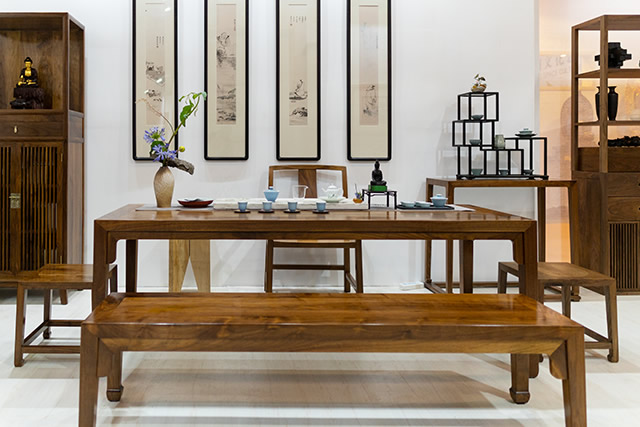
3. The quality of the mortise and tenon joinery is also a factor that can affect cracking. For high-quality rosewood furniture, the installation of the mortise and tenon structure must be precise, without any misalignments or inconsistencies.
4、Redwood Furniture Details: Expansion Joints, Expansion joints typically have a width of 0.3cm to 0.5cm. Expansion joints are left to prevent cracking of the redwood furniture frame or mortise due to thermal expansion and contraction.
5. Regarding furniture, "lacquer in the south, wax in the north," if the surface preparation is not properly done, the wood will be more susceptible to contact with moisture in the air, resulting in more pronounced expansion and contraction.
Two. How to repair cracks in red wood furniture.
Generally, red wood furniture will have expansion joints to accommodate wood's natural expansion and contraction. Without these joints, furniture is prone to cracking and deformation. We typically categorize repair methods for cracks into four main types: minor, small, medium, and large.
1、Methods for repairing fine cracks and small cracks
Apply clean water continuously into the cracks for 7 days, utilizing the inherent properties of wood shrinkage and expansion. The cracks will swell with water, and the fine cracks will naturally heal within 7 days. Then, use sandpaper with a grit of 1500 or higher to smooth the surface, wipe clean with a soft cloth, and then paint or apply wax.
When painting, choose environmentally friendly, odorless paints. Apply one thin coat, then sand lightly and repeat this process four times. For applying wax, repeat the process four times, but do not use sandpaper; instead, use a fine cloth to buff.
2、Repairing small and medium-sized cracks.
Use a file to remove any loose wood fibers from the interior of the rosewood. Fill the cracks with wood filler and apply animal glue (or 502 glue or other chemical adhesive) multiple times, allowing it to dry naturally. After drying, start with 800-grit sandpaper to smooth the surface, then continue with 1500-grit or higher sandpaper, wetting the sandpaper as needed. Repeat the sanding and waxing process described above. With careful application, the repairs will be almost undetectable.
3、Repair methods for medium and large cracks.
Use a saw or knife to cut or shave away wood pieces inside the red wood furniture, aiming to create wood pieces that closely match the size of the cracks. Take your time and work carefully, then apply wood glue. Immediately after applying wood glue, insert the glued wood pieces into the cracks. If there are still small cracks, repeat step 2. After the wood is completely dry, proceed with sanding, painting, or waxing. Refer to methods 1 or 2 for sanding, painting, or waxing.
Repairing large or extensive cracks requires technical expertise and experience. If you lack the necessary skills to repair red wood on your own, it is best to consult with professional contractors.