
I.Sports flooringCauses of blistering
1、Due to the expansion and deformation of wood flooring caused by moisture.
① Due to the failure to detect the issue promptly, water leakage from faucets or radiators in the building's public restrooms caused the wooden flooring to remain submerged for an extended period, leading to warping and expansion/contraction of the wooden flooring. As the wooden flooring is seamless, such warping is a normal occurrence.
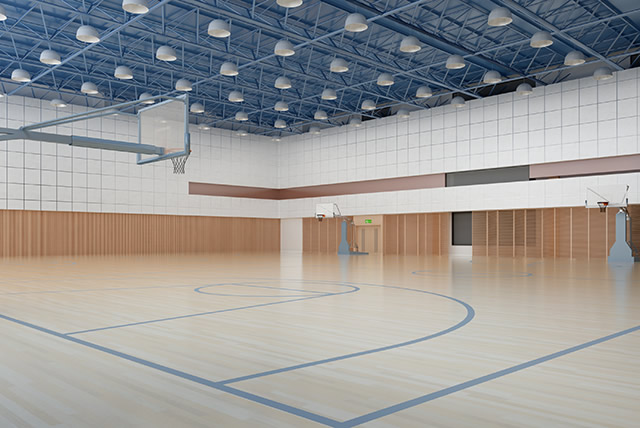
② Due to unfavorable weather conditions and prolonged rainy weather, the relative humidity in the air will directly increase. For indoor sports halls with sports flooring, if dehumidification measures are not taken in a timely manner, the moisture in the air will be absorbed by the wooden flooring, causing the flooring to expand due to moisture absorption.
③ Some school gyms, due to factors such as holidays, have been closed for extended periods with no one entering. This results in poor ventilation and prolonged humidity inside the gym, which can be absorbed by the wooden floor, leading to slight bulging.
④ Failure to inspect the site conditions before installation, followed by direct flooring installation, resulted in excessive moisture content in the concrete between the ground and wall, and a lack of any moisture-proof isolation. Over time, this would lead to moisture absorption, causing the flooring to bulge and deform.
2、During construction, sufficient expansion joints were not provided or were omitted.
Some clients may request that no expansion joints be left between wooden floor sections to maintain a more aesthetically pleasing appearance. However, if expansion joints are not properly left between wooden floor sections during installation, the wooden flooring will not be able to expand or contract with changes in humidity. once the wooden flooring absorbs moisture from the air, it will expand within a reasonable range. Leaving expansion joints is essential to prevent this from happening, such as cracking of the surface coating due to lack of expansion joints.
3、The dimensions of the sports wood flooring are too large.
To reduce processing costs, manufacturers of sports flooring often produce large-sized panels, such as long or wide ones. However, due to the specific requirements of sports venues (including high impact and movement), if individual wooden flooring panels are too long or wide, it can lead to uneven stress distribution and result in issues like warping or sinking.
4、Before, during, and after installation, the site was not thoroughly cleaned to remove debris.
During the installation of sports wood flooring, if the site is not thoroughly cleaned, leaving debris on the floor, people's frequent contact and collisions with these debris can damage the floor, causing it to rise.
5、Failure to follow manufacturer's instructions for maintenance.
Due to a lack of communication with the cleaning staff regarding proper cleaning procedures, the frequent use of wet mops to clean the sports field, followed by a failure to dry the floor with a dry mop, results in moisture penetration into the flooring, leading to issues such as bubbling or lifting.
Two. What to do if the sports floor is lifting?
1、Open and ventilate the area thoroughly.
To resolve issues with bubble formation in sports wood flooring, it needs to be disassembled and ventilated to effectively alleviate bubble formation in the flooring and surrounding areas. After lifting the bubbled flooring, it is necessary to wait for the subfloor and joists to dry completely before reinstalling the flooring. If the bubble formation is severe, replacing the flooring may be necessary.
2、Remove debris from expansion joints.
When installing flooring, expansion joints are always left. If these joints are blocked by debris and dust, they need to be cleared out as soon as possible.
3、Grinding and repair
If the blisters are very small, for example, with a diameter of no more than 2 cm, then grinding and repair can be considered, which can also save on repair costs.