
- Plywood, also known as veneer or composite panel, distinguishes between plywood and composite panel, or which is better? This refers to two different terms for the same product, and there is no basis for comparison.
What it is: Plywood is a type of engineered wood product manufactured by bonding thin wood veneers together with adhesive under heat and pressure. It consists of one or more layers of veneers glued together with varying grades and directions of the wood grain.
Process: The processing requirements for particleboard are high, requiring sufficient space for the wood to dry naturally and also strict drying process control through a drying kiln.
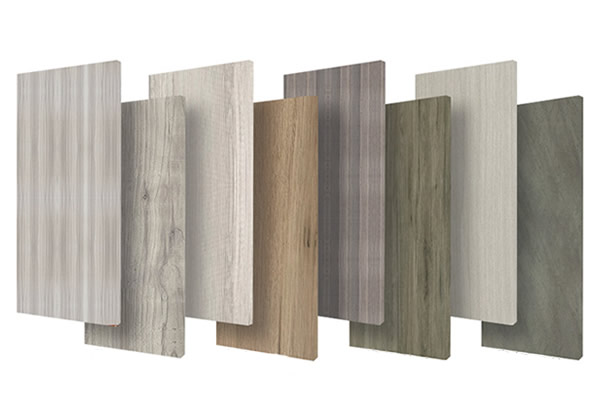
Additionally, the quality of the processing equipment not only requires significant capital investment, but also plays a crucial role in ensuring the precision and quality of the finished products. Especially after the implementation of regulations limiting the use of hazardous substances in decorative and renovation materials, the adhesives used for plywood must be improved. This alone will increase costs by approximately 10%, and in addition to the continuous increase in raw material prices, it is impossible to manufacture truly green and environmentally friendly plywood at prices of around 50-60 yuan. Even E1-grade large-core panels that meet national standards cost around 90 yuan, which is already a very low profit margin.
Environmentally Friendly: Interior decoration and renovation projects can only use E1-grade particleboard.
If the product is E2-grade particleboard, even if it is a qualified product, its formaldehyde content may be more than 3 times that of E1-grade particleboard. Therefore, it should not be used for home decoration and renovation.
However, if a large quantity of E1-grade particleboard is used, it may also cause the overall formaldehyde content in the room to exceed the standard, so even if it meets the standards, it does not necessarily guarantee that it is completely harmless to the human body.
Generally, for residential spaces of approximately 100 square meters, the use of plywood should not exceed 20 sheets. Additionally, other interior finishes should be considered, as excessive use can lead to formaldehyde levels exceeding the standard in the indoor environment. In particular, avoid using plywood as a sub-base directly beneath the flooring, as this can significantly increase formaldehyde levels in the indoor air.