
One,Polished tilesGood or not
Polished bricks are bricks that have been polished to a glossy surface, and are a type of solid-colored brick. Compared to solid-colored bricks, polished bricks have a much smoother surface. Polished bricks are hard and durable, making them suitable for use in indoor spaces other than bathrooms and kitchens. Using polishing technology, polished bricks can create various stone-like and wood-like effects.
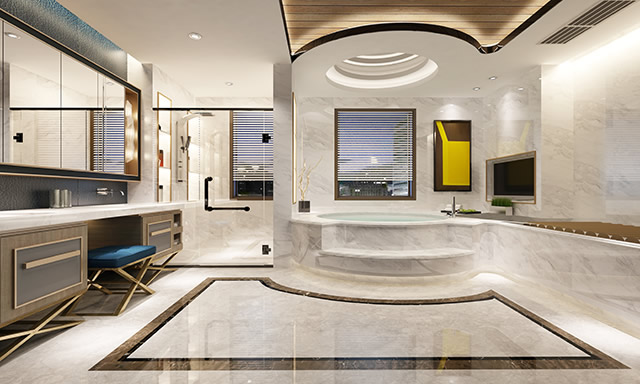
In modern architectural decoration materials, polished tiles are highly favored and loved by consumers due to their abrasion resistance, corrosion resistance, mirror-like surface, and diverse, vibrant colors. They have become the mainstream product in the ceramic industry.
What are the advantages and disadvantages of polished bricks?
1、Advantages of polished bricks
① Thin brick units, lightweight: Polished bricks are thin and lightweight, which does not add to the structural load of the building and is easy to install.
②Minimal Color Variation: Natural stone exhibits significant color variation due to differences in the time of formation and the depth of the rock strata. Conversely, polished tiles are carefully formulated to ensure consistent color across batches, resulting in minimal color variation.
③ High Bending Strength: Polished bricks are manufactured by pressing thousands of tons of bricks using hydraulic presses, followed by firing at temperatures above 1200°C. This results in high strength.
④ Absence of Radioactive Elements: It is commonly said that natural stone is a mineral material that has not undergone high-temperature sintering, so long-term contact can be harmful to the human body. However, polished tiles, which have undergone high-temperature sintering, do not produce elements that are harmful to the human body.
2、Disadvantages of polished bricks
① The uneven surface texture left after polishing bricks can trap dirt and contaminants, making it easy for pollutants to penetrate the surface, even liquids spilled on polished bricks. However, some high-quality polished bricks undergo anti-stain treatment before leaving the factory.
② The polished brick effect glaze differs from techniques like marbling and large-particle decoration. It utilizes a special, dedicated molten material mixed with the base material, which is then pressed or applied to the brick surface using a special screen. After firing, polishing produces decorative effects such as different colored or patterned granules or patterns.