
I.Vinyl flooringCan it be used in bathrooms?
- Vinyl flooring can be used in bathrooms, but certain conditions must be met:
1、It is essential to ensure the waterproofing performance of the bathroom floor, preventing moisture from rising and seeping through. However, water from normal use of toilets, sinks, and water pipes is acceptable.
2. When using roll flooring, it is recommended to avoid using sheet flooring. PVC flooring is available in two types: roll flooring with a width of 2M and sheet flooring with a length and width of up to 1200mm. Sheet flooring is prone to water penetration through the seams, which can lead to failure of the flooring's adhesion. Therefore, it is not recommended to use sheet flooring.
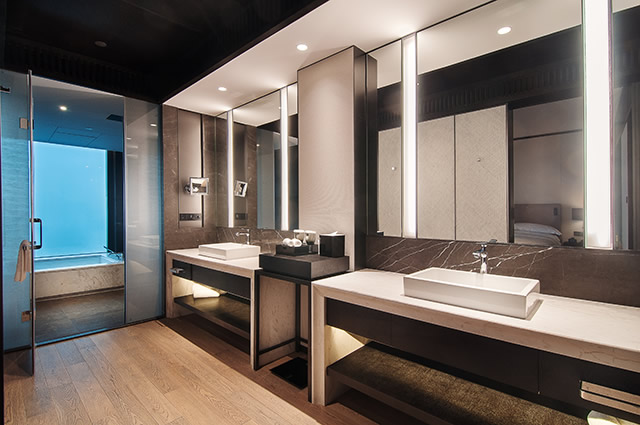
II. Advantages and Disadvantages of Installing Vinyl Flooring in Bathrooms
Advantages:
1. Space-saving: Offers unparalleled advantages in high-rise buildings for structural support and space optimization. Also provides special advantages in the renovation of existing buildings.
2、Abrasion and Scratch Resistance: The PVC flooring surface has a special, high-tech-processed, transparent, abrasion-resistant layer that offers superior abrasion resistance, impact resistance, and maintains its shape. It is reusable and has a typical lifespan of 20-30 years.
3、Waterproofing: Due to its primary components of plastic and calcium carbonate, and the advanced glass fiber layer, the plastic flooring exhibits excellent dimensional stability and resistance to water. It is not susceptible to damage from occasional immersion, nor will it experience mold growth or deformation due to high humidity or temperature fluctuations.
4、High elasticity and exceptional impact resistance: PVC flooring has a soft texture, providing excellent elasticity and significantly reducing the risk of slips and falls. It also exhibits strong elasticity, effectively absorbing impact and preventing damage from heavy objects.
5、Anti-Slip: The wear-resistant layer on the surface of PVC plastic flooring has special anti-slip properties. When PVC plastic flooring is wet, it provides a more textured and less slippery surface, making it suitable for use in bathrooms.
Disadvantages:
1、The bathroom space is small, making it unsuitable for large-sized flooring, so it's necessary to measure the dimensions and leave a 0.8-1.2 inch (2-3 cm) margin for installation. The flooring can then be cut to shape using appropriate tools on-site.
2、Use waterproof silicone sealant to seal the surrounding gaps thoroughly. Proper sealing is crucial to prevent water ingress, which can lead to blistering.