
One. Do sliding doors have locks?
Most sliding doors have dedicated locking mechanisms.
Of course, the type of lock to use for sliding doors also depends on the material of the door. Sliding doors made of aluminum and magnesium materials can use "lever handles" or "glass locks." Sliding doors for bathrooms are typically equipped with "lever handles," while sliding doors for bedrooms can use either "lever handles" or "glass locks." For sliding doors made of other materials, installing the lock can be more complicated, as it may require removing the door first to install the appropriate locking mechanism.
Two. Can sliding doors be locked?
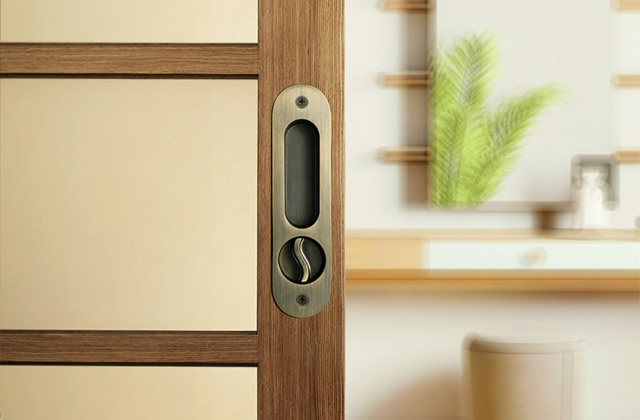
If the sliding doors purchased do not have locks initially, they can be easily installed with locks.
A lock consists of a front and rear plate, a lock body, and a door strike plate, along with screws and other small accessories. First, measure the thickness of the door opening. Then, place the lock body on the door frame, with the locking tongue facing upwards, and determine the appropriate position. Next, install the screws and check that the lock body does not wobble.Then, insert the front plate into the lock body, and align the rear plate with the front plate. Adjust as needed, and use the handle to engage the locking tongue, checking for any resistance or binding. If there is no resistance, tighten the screws.
Three. How to select a sliding door lock
1、Inspect the tongue and groove
When selecting sliding door hardware, it is important to check the quality of the latch. Typically, high standards are applied to both the latch body and the latch. The latch body should ideally be robust and durable, while the latch itself must operate smoothly and without any dead spots.
2、Inspect the panel
Sliding door locks come in various styles. The client should choose a panel that matches their preferred aesthetic. Typically, a glossy finish and a surface free of scratches are desired, as well as properly aligned screw holes and screws with no signs of misalignment.