
I.Plastic wood flooringGood or not
1、Waterproof and Moisture-Resistant: As everyone knows, wood flooring is highly sensitive to water and humidity. Prolonged exposure to water can cause wood flooring to rot and warp. Synthetic wood flooring effectively addresses this drawback, offering superior waterproof and moisture-resistant properties, making it suitable for environments where traditional wood flooring cannot be used.
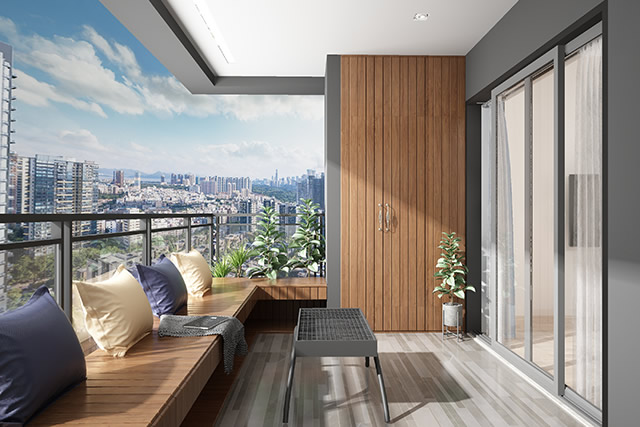
2、Diverse Patterns and Styles: Compared to traditional wood flooring, synthetic wood flooring not only offers a natural wood texture and appearance, but also boasts a wider range of colors, allowing for more personalized and distinctive floor designs.
3、Pest and Termite Protection: Natural wood flooring is susceptible to insect infestation and termite damage, while synthetic wood flooring effectively prevents pest and termite problems, resulting in a longer lifespan compared to traditional wood flooring.
4、Excellent Workability: Due to the diverse styles and patterns of synthetic wood flooring, it is suitable for various interior design styles and allows for personalized designs, offering significantly greater workability compared to conventional wood flooring.
5、Environmentally Friendly and Pollution-Free: The plastic wood flooring does not contain benzene, and its formaldehyde content of 0.2 is below the EO-level standard, making it a product that meets European environmental standards. You can choose and use it with confidence.
6. Fire Resistance: Plastic wood flooring effectively resists fire and meets B1 fire rating, which means it can self-extinguish and does not produce any toxic gases. Additionally, plastic wood flooring is easy to install and does not require complex installation processes, thus saving installation time and costs.
II. How to assess the quality of wood-plastic flooring.
1. Observe the appearance: First, check for any streaks or longitudinal grooves on the surface of the wood-plastic flooring. Also, check if the surface and sides of the wood-plastic flooring are smooth and free from irregularities. Additionally, check for any blockages between the mold and the molding. Finally, consider whether the thickness of the wood-plastic flooring is uniform.
2、Fire and Water Resistance Testing: This is a critical aspect of wood-plastic flooring testing, according to GB8624, wood-plastic flooring can achieve a maximum fire resistance rating of B1. It should automatically extinguish flames and not produce any toxic gases. GB/T 24508, on the other hand, specifies that the substrate's expansion rate for wood-plastic flooring should be ≤10% and the non-expansion rate should be ≤3%. The wood-plastic flooring's dimensional change rate in length, width, and thickness directions should be ≤0.3%, ≤0.4%, and ≤0.5%, respectively.
3、Wood-plastic flooring hazardous substance detection: GB/T 24508 specifies that the formaldehyde content in wood-plastic flooring should be less than 0.2mg/L, which is below the E0-level (European environmental standard). PVC-based wood-plastic flooring requires separate detection of the vinyl monomer content in the substrate. The content of heavy metals such as lead, cadmium, and mercury is also included in the hazardous substance detection.
4、Wood-plastic flooring's detachment strength detection: The main detection items include bending failure load, ambient temperature drop ball impact, and low-temperature drop ball impact. Specifically, the retention rate of the bending failure load as specified in the aging performance should be ≥80%, and there should be no cracks in the low-temperature drop ball impact at -10℃.