
One. What is the principle of a water softener with salt?
Most water softeners operate based on ion exchange regeneration technology, where salt is used to exchange calcium and magnesium ions in the resin, thereby achieving descaling. When the accumulated hardness ions in the resin reach a saturated state, its effectiveness diminishes. In this case, instead of replacing the resin, it is necessary to add regeneration materials, such as water softener salt.
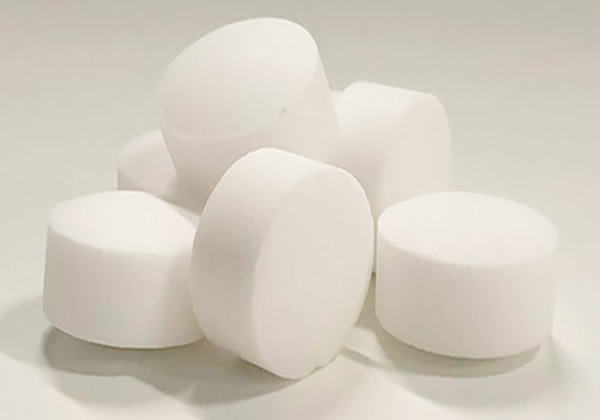
Resins are regenerable; typical soft resin has a lifespan of 7 to 8 years, and some can last even longer. Simply adding a regenerant, such as a soft resin salt, will replace the hard ions within the resin, restoring its normal functionality. Please note that the soft resin salt used here is specifically designed for water softeners and is not the same as ordinary table salt.
Soft water machine salt is a substance used to remove impurities adsorbed by ion exchange resins through ion exchange, thereby restoring the adsorption capacity of the ion exchange resins.
Two. How to add salt to the water softener
1、After the initial addition of salt, add 1-2 liters of tap water to the salt container to help dissolve the salt.
2. The specific amount added depends on the capacity of the water softener salt tank. Generally, it is best to add 1/2 to 2/3 of a box, but not less than 1/3, and the total amount should not exceed 3/4 of the salt tank's capacity.
3. Resins are commonly used as softening agents in soft water. After ion exchange produces a certain amount of soft water, the hardness ions adsorbed by the resin will reach saturation. This requires regeneration of the resin, where the hardness ions in the resin are replaced with ions from the softening agent solution, allowing the softening agent to continue to be used.