
One、High-rise fireproof door fire protection acceptance standards
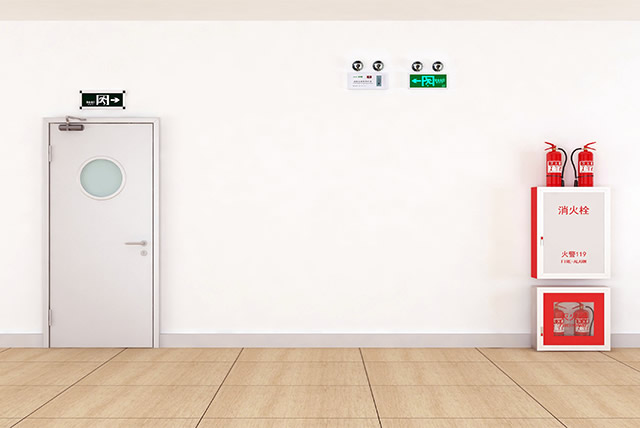
1、Fire-resistant door installation acceptance
This primarily includes:- Checking the secure installation of steel fire doors;- Verifying the proper installation and positioning of door closers, ensuring compliance with design specifications;- Ensuring the installation location is appropriate and does not deviate from the design;- Confirming that the fire door opening direction complies with design requirements;- Verifying that the quantity and location of embedded steel components meet design specifications, and that their installation and connection methods comply with the design requirements.
2、Fire-resistant door quality acceptance
① Basic fire door inspection
Acceptance criteria: Sealing must be airtight, switches must operate smoothly, without any deformation or warping; excellent sound insulation, automatic closing mechanism must function smoothly.
Excellent fire-resistant doors: Tight closure, smooth operation, no obstructions, rebound, no deformation or warping; good sound insulation; steel fire-resistant doors have sensitive automatic closing mechanisms.
② Quality inspection of fire door accessories
Acceptance criteria: Complete accessories, firm installation, correct positioning, smooth and applicable operation.
Excellent fire door standards: Complete accessories, solid installation, correct positioning, precise installation, smooth opening and closing, and aesthetically pleasing.
③ Inspect the gap size and filling quality between the fire door frame and the wall.
Acceptance Criteria: The filling and embedding must be complete and thorough, and the filling and embedding materials must meet the design requirements.
Excellent fire door standards: The filling and embedding material should be dense and compact, with a smooth surface, and the filling and embedding material should meet the design requirements.
④ Fire-resistant door surface quality inspection
Acceptance criteria: The surface must be smooth, clean, free of pinholes, pits, and rust; and the surface coating color must be uniform.
Excellent fireproof door standards: The surface should be smooth, clean, and free of scratches, pinholes, pits, and rust. The surface coating should have a uniform, consistent color and a glossy, aesthetically pleasing appearance.
Two. Common issues found during fire door inspections
In the daily use of fire-resistant doors, it is necessary to designate specific personnel to regularly inspect fire-resistant doors at various locations to prevent misuse or damage, ensuring that they function as intended. According to information provided by fire safety professionals, common issues that can occur during fire safety inspections of fire-resistant doors include:
1、The fire door is in the open state when closed.
During fire safety inspections, it was found that some fire-rated doors, which are typically kept closed, were frequently found open. This is primarily due to human factors. When used, these doors can cause inconvenience for some people, so some units or individuals may remove the closing devices or use wedges to keep the doors open, preventing them from automatically closing. Alternatively, due to lack of maintenance and management, the doors may be damaged and unable to close. In these cases, fire doors are unable to perform their fire-rated isolation function, and may even increase the spread of fire.
2、Missing or malfunctioning door closers
In some cases, after the fire door passes inspection and acceptance, some units remove the fire door because they believe it affects interior lighting and traffic flow. Additionally, improperly opening fire doors during cargo handling can severely damage the door closers. Prolonged exposure of fire doors can lead to the loss of closing force in the door closers. Without regular maintenance of the door closers, malfunctions can occur and cannot be resolved promptly, ultimately affecting the performance of the door closers.
3. Fire-resistant door frame and door panel damage, as well as detachment of seals.
Prolonged use of fire doors, without regular maintenance and upkeep, can easily lead to damage of the door frame and door panel, as well as detachment of the seals. Some units neglect the regular maintenance of fire doors during operation, causing damage or wear and tear to the doors through impact or other means, and failing to take timely repair measures. This can significantly weaken the fire-resistant function of the fire doors.
4、Incorrect installation of fire doors
Some units have failed to recognize the importance of fire doors and their specific installation details, leading to incorrect installation of fire doors. This manifests in the actual installation process, where there is an improper installation of sealing strips, sequence closers, and other devices, or where excessively large gaps are left around fire doors, such as excessively wide floor gaps, frame-to-frame gaps, and door-to-frame gaps. These conditions significantly impair the functionality of the fire doors.