
One, what part of the door is silent?
1、Utilize silent locks. Many people who are sensitive to noise will be disturbed by the sound of opening and closing doors. Silent door locks utilize magnetic principles to effectively solve this problem. While they cannot completely eliminate the noise, they significantly reduce it.
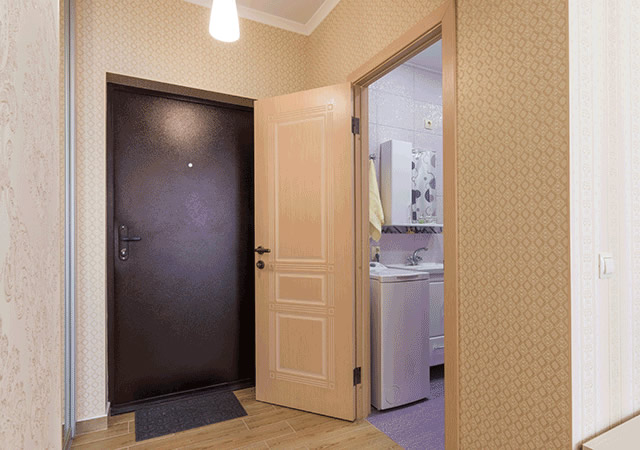
2、Install magnetic strips, and increase the thickness of the door panels. Ordinary door panels are typically 4 centimeters thick, while silent doors are increased by 0.5 centimeters. This approach does not compromise the overall aesthetic of the home design, but effectively reduces sound transmission and provides some insulation.
3. Silent doors primarily achieve sound insulation through magnetic strips, silent locks, and the structural design of the door core. When opening a silent door, you will find that magnetic strips, which are thin and flexible, are installed around the entire inner surface of the door core and are fixed with metal. These are similar in material to those found in refrigerators. Magnetic strips are also installed in the door frame, which, when the door is closed, create a tight seal through magnetic attraction. The magnetic strips in the door frame ensure airtightness. Since indoor sounds are primarily transmitted through air, the magnetic strips can effectively block the transmission of air and sound. The silent lock, also known as a silent magnetic lock, features a rectangular tongue that is concealed, reducing friction with the door frame when opening.
II. What to check during the acceptance of silent doors
1、 Consider the weight. The density of the materials and the formula for sound insulation have a direct relationship. Therefore, materials with higher density are generally better for sound insulation. Hollow-core doors, which are lighter due to their manufacturing process, are a primary reason for poor sound insulation. However, it is important to note that adding sound-absorbing cotton in the middle of a hollow-core door can result in better sound insulation than solid wood doors.
2. Inspect the thickness of the door panel. Thicker door panels generally provide better sound insulation. Typically, door panels use 8mm thick material. Thicker door panels also result in better surface smoothness, but at a higher cost. However, the steel fire-resistant door's steel sheet is 3mm thick, which also provides good sound insulation.
3. Inspect the flatness of the wooden door. The more even the door, the better it will fit with the door frame, regardless of the structure. Warped doors will definitely compromise sound insulation and allow air leakage.
4、There is also a slightly more professional aspect: the quality of the expansion joint filler between the door frame and the wall. Poor quality can significantly affect sound insulation.
Please note: Soundproofing for doors and windows, just like fire-resistant doors, is classified according to national standards, not just a single aspect. Regarding the concepts of "soundproofing" and "sound absorption," soundproofing depends on the density of the material (when the overall weight of a metal door is less than that of a wooden door, its soundproofing performance is inferior), while sound absorption depends on the fine surface area and irregular surface space of the material (such as rock wool, mineral wool, and foam, which are sound absorption materials, not soundproofing materials).