
One, which is better, stainless steel cabinets or wooden cabinets?
1、Health and Environmental Considerations
Traditional wooden cabinets may appear green, natural, and environmentally friendly, but the manufacturing and assembly processes require the use of various adhesives and fixatives, which release a large amount of formaldehyde, posing a health hazard.
Stainless steel cabinets, especially those made with 304 food-grade stainless steel, are waterproof, fire-resistant, scratch-resistant, crack-resistant, dimensionally stable, and resistant to mold growth. Furthermore, they are free from formaldehyde, ensuring a safe, healthy, and environmentally friendly environment.
2、Sanitary cleaning
Stainless steel cabinets are significantly easier to clean compared to wooden cabinets. Simply use a damp cloth with a mild detergent to wipe the stainless steel surface, and it will remain clean and shiny. Furthermore, even after prolonged use, stainless steel surfaces will not easily show signs of wear and tear.
Wooden cabinets are particularly difficult to maintain. Accidental contact with oil or dirt requires significant time and effort to clean, and they are prone to fading and discoloration, necessitating replacement and potentially causing secondary contamination.
3、 Sealing performance
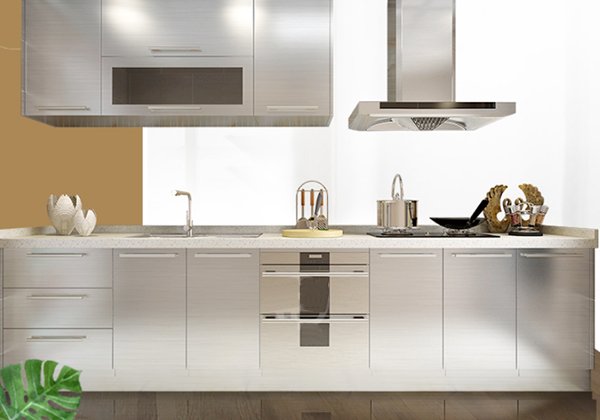
Traditional wooden cabinets, due to the expansion and deformation of the wood caused by temperature changes, can result in poor sealing, making kitchens, which are naturally humid due to cooking, susceptible to bacterial growth and attracting pests like cockroaches.
Stainless steel cabinets feature seamless integration of the sink, splash guard, and countertop with no gaps. The cabinet body is seamlessly formed from stainless steel material, and the door panels expand or contract due to temperature changes, resulting in a clean and hygienic appearance that prevents small insects from entering and reduces bacterial growth.
II. How good are stainless steel kitchen cabinets for home use?
Advantages:
1、Stainless steel cabinet countertops are monolithic and will never crack.
2. It is absolutely environmentally friendly, as stainless steel is not synthesized from epoxy resin and does not contain the radiation associated with natural granite.
3. The integration of the sink, splash guard, and countertop creates a seamless and overall aesthetic, with no gaps, which prevents bacterial growth.
4、Excellent fire resistance and water resistance. This putty paste is ideal for kitchens, where spills of sauces and soups are common. A simple wipe leaves no trace.
5、Stainless steel is impact-resistant, has high hardness, is easy to clean. Simply wipe stainless steel countertops with a damp cloth and dish soap to restore their shine.
6. Colorfastness: Unlike many other countertop materials that fade and degrade over time, stainless steel retains its original appearance indefinitely. Replacing wooden cabinets also creates secondary pollution. Stainless steel cabinets eliminate this issue.
Disadvantages:
1、Those who prefer a soft texture may not like it. Its visual appearance is quite rigid, giving a cold and impersonal feel. It also lacks appropriate and effective treatment in the corners and joints of stainless steel cabinets.
2. Repairing can be challenging. Stainless steel cabinets are susceptible to damage from sharp objects, which can leave permanent marks. These fine scratches can also harbor dirt, so it is essential to pay close attention to cleaning the surface.
3. Inconsistent quality. Currently, many stainless steel cabinets in China are prone to oxidation, which differs significantly from imported products. Furthermore, imported products are generally more expensive.
4. If the budget is insufficient, it is best not to consider it. The cost is significantly higher, approximately five to six times that of other materials.
5. The designs are not diverse enough. The process is complex, requiring both skilled craftsmanship and specialized equipment for cutting and shaping, making it impossible to create intricate designs.
6. It is difficult to purchase high-quality products due to limited brand options and a lack of established industry-wide production scale.