
One, do polished bricks require jointing?
Polished tiles can be chosen to have or not have jointing. Even if the joint gaps left by the construction worker are slightly larger, jointing is still required. This is to enhance aesthetics and eliminate the effects of dimensional variations in the tiles. Additionally, the jointing agent can also protect the flooring and prevent water from seeping into the tiles.
Two. Why cannot use jointing agent on polished bricks?
Due to the low water content and high hardness and wear resistance of polished tiles, their expansion and contraction range is relatively small. Therefore, high-quality polished tiles can reduce the pre-existing gaps between tiles to within 1mm, and the 45-degree chamfers on the edges of the polished tiles can also effectively mitigate the effects of expansion and contraction. Gaps of less than 1mm between tiles do not require jointing, and even if jointing is performed, the effect is barely visible.
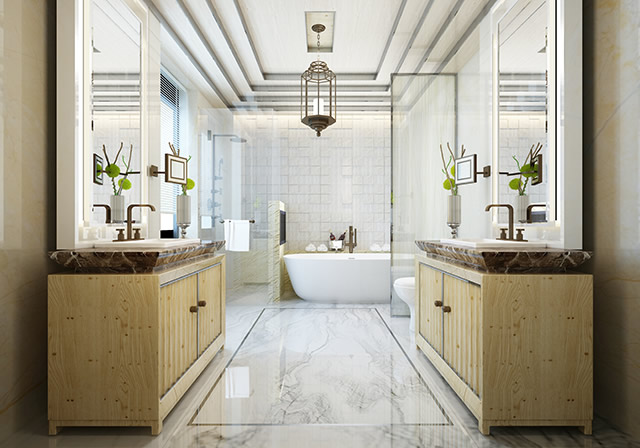
III. How to apply grout for polished tiles
Although polishing tiles require small grout lines, they can easily be filled with debris over time if not filled with a product. This not only makes cleaning difficult and unsightly, but also creates a breeding ground for bacteria. This significantly compromises the cleanliness and hygiene of the living space, and can also pose a health hazard, which is undesirable. Therefore, polishing tiles can be seamlessly tiled. Here are two methods for seamlessly tiling polishing tiles.
Method 1: Use a utility knife and brush to thoroughly clean the tile joints. If using old tiles, first remove the existing grout using a chisel. Apply self-adhesive tape along both sides of the joint. Cut the nozzle at a 45-degree angle and load it into the caulking gun. Evenly inject the grout into the tile joints. Use your index finger to smooth the grout, scraping approximately 2 meters at a time. Remove the tape after about 10 minutes.
Method 2: After thoroughly cleaning the gaps, apply genuine porcelain adhesive directly without using masking paper. Use a puttying ball to spread and compact the genuine porcelain adhesive. once the surface is cured, use a scraper to remove any excess adhesive.
IV. important considerations for installing joint compound on polished tiles
1、Construction Time: The self-leveling adhesive should be applied at least 24 hours after the tile laying, and the substrate must be completely dry before application.
2、Grout for Tiles: After installing the tiles, it is recommended to first apply grout to the joints (the white, powdery type, which costs around 5 yuan per package in tile stores). Then, create a grout gap of 2-3mm. This will save costs, as grout is significantly cheaper than genuine tile adhesive. Of course, those with more resources can skip this step.
3. Clean the joints: Before applying the genuine ceramic adhesive, thoroughly vacuum out any dust or debris from the tile joints. Wipe the sides of the tiles with a cloth to remove any remaining particles, as this can affect the lifespan of the genuine ceramic adhesive.
4、Apply and Fill Joints: After applying with the caulking gun, remove approximately 30g of the putty powder from the nozzle. When filling the joints, ensure the caulking gun is perpendicular to the tile surface to allow the putty powder to completely fill the gaps. Apply even pressure and maintain a consistent speed.
5、Joint Finishing: To create a rounded surface on the cured joint after using genuine cement mortar, use a specialized joint finishing ball to apply pressure and pull it along the joint from one end to the other, maintaining even pressure (your fingers can also be used). To create a flat surface on the cured joint, use a scraper or soft rubber blade to apply pressure and pull it along the joint from one end to the other, maintaining even pressure.
6. Cleaning and Treatment: If using the pre-cut paper, allow it to sit for 5-10 minutes before removing it and cleaning any residual adhesive. If using the no-cut paper method, wait approximately 3 hours after applying the mortar, then use a cleaning scraper to remove any semi-cured adhesive from the tile surface.
7. Finished Product Protection: Maintain at temperatures below 25°C, allow to dry to the touch within 3 hours, achieve full strength within 24 hours, and allow natural curing for 7 days. After polishing and applying adhesive, avoid contamination, water exposure, and foot traffic on the surface for 24 hours.