
One, how to adjust the color of industrial paint
1、First, test small samples to determine the number of color variations present in the paint sample. Then, separately mix the secondary and tertiary colors in separate containers to achieve the desired color palette.
2. The primary color paint is a color with a large consumption volume but a small color intensity. To achieve the desired color, a secondary color with a stronger color intensity is added to the primary color paint, and the mixture is thoroughly stirred. Comparing with samples and color charts, the color is gradually deepened until the desired effect is achieved. For example, when mixing a beige color, start by adding a small amount of white paint, followed by yellow paint, and continuously stir until the desired color is achieved.
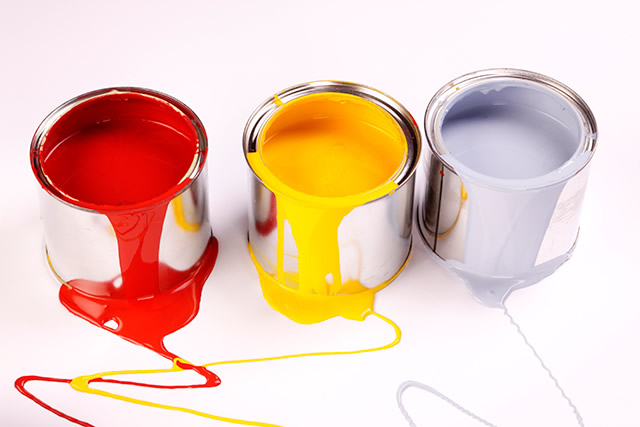
3. When mixing paint colors, the resulting color will be darker than the original, so the color of the wet paint should be slightly lighter than the color on the sample. It is particularly important to understand the floating properties of primary colors when mixing, especially for amine-based coatings and chlorinated polyvinyl chloride (CPVC) coatings.
4. When tinting, add appropriate auxiliary agents such as varnish, hardener, and drying agent. When tinting in winter, add the drying agent to the container first before starting the mixing process to prevent affecting the color.
5. When mixing multi-colored paints, it is necessary to select paints with similar properties, and the solvent systems should be compatible. Otherwise, this can affect the quality of the paint and lead to phenomena such as layering and coagulation.
6. The colors typically come with different color cartridges. Follow the following color mixing principles:
When using "Bei Zheng Green", it is generally recommended to use yellow putty paste with green heads and blue putty paste with yellow heads.
When mixing purple, use blue with red accents and red with blue accents.
When mixing with orange, use red putty powder with yellow tips and yellow putty powder with red tips.
When mixing multi-colored paints such as gray and green, it is necessary to use various pigments with different oil content and density. This often leads to phenomena such as "blooming" and "peeling". In such cases, a small amount of surface-active agent, leveling agent, or anti-blooming agent can be added to resolve the issue. The typical addition amount is between 0.1% and 1%.
II. Basic principles of paint mixing
1、The mixing area must have natural light; artificial light is not sufficient. If there is no natural light, it will be impossible to accurately match the color. When mixing and matching colors, natural light must directly illuminate the color board and the actual object. This means that the person should stand with their back to the light, holding the color board so that the light shines directly on the color board for accurate color differentiation. The most accurate and ideal lighting time is between 9:00 AM and 4:00 PM.
2. From light to dark, from bright to dull. When adjusting the formula for the initial color mixing, first ensure that the color is as light or as dark as possible according to the above principles. Then, select the original formula's colorants and find the most suitable colorants in the colorant card, and gradually increase the amount of colorants to achieve a gradual transition from light to dark or from bright to dull. However, if the color is initially mixed too dark or too dull, it will be very difficult to reverse this and will also consume a large amount of colorants.
3. If the correct color of the industrial paint is not known, it is recommended to first prepare a small batch (0.1 liter) according to the formula and observe the resulting color. based on this, adjustments can be made to the formula. Initially, mix the formula according to the principle of "gradually increasing depth and decreasing brightness" by appropriately reducing or increasing the proportion of certain colorants. Then, further fine-tune the mixture according to the above method. Ideally, fine-tune the mixture using colorants other than those in the original formula. This approach can reduce waste during paint mixing and more effectively achieve the desired color.
4. Experience leads to proficiency, and this is an immutable truth. However, it is essential to carefully consider and analyze the specific effects of different colors. For colors that are difficult to mix, the paint mixing technician must understand that the thickness and number of coats, as well as the spraying technique (light, heavy, etc.), all affect the final result. When mixing colors, the technician should adjust the depth and shade of the color to match the specific spraying technique of the painter. Relying solely on comparing samples may not always achieve the optimal result.