
One, what kind of machine is used to spray fire-resistant coatings?
High-pressure, gas-free spray guns and low-pressure air spray guns can both apply fire-resistant coatings. However, high-pressure, gas-free spray guns can only apply fire-resistant coatings that are free of particles and fibers and do not rapidly solidify. Therefore, high-pressure, gas-free spray guns are typically used to apply ultra-thin or thin fire-resistant coatings. Thick fire-resistant coatings for steel structures can only be applied using low-pressure air spray guns.
II. Spray Application Method for Fire-Resistant Coatings
The spraying construction methods for ultra-thin, thin, and thick steel structure fire-resistant coatings differ, and the following provides a brief introduction to the spraying construction process for thick steel structure fire-resistant coatings:
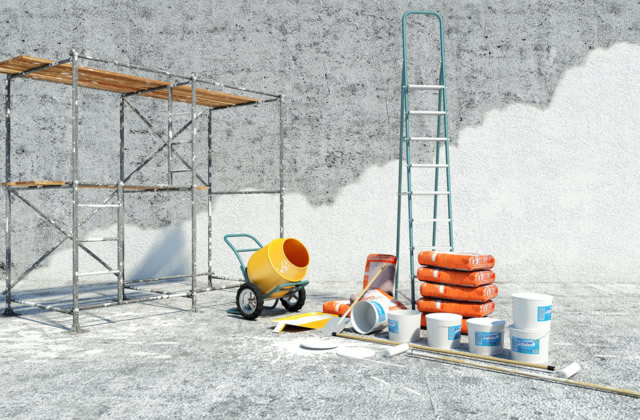
1、For applying fire-resistant coatings to steel structures, it is recommended to use a pneumatic sprayer with a pressure of 0.4~0.6 MPa and a nozzle diameter of 6~10 mm.
2、When mixing, strictly adhere to the specified ratio of materials or additives, and ensure the consistency is appropriate. Mix and use immediately.
3. Spray application should be completed in multiple coats, with each coat having a thickness of 5~10mm. It is necessary to apply a second coat only after the first coat is essentially dry or has cured. The spray protection method, number of coats, and coating thickness should be determined based on the construction design requirements.
4、During construction, the operator should use a measuring needle to check the coating thickness until it meets the design specifications, at which point spraying can be stopped.
5、After spraying, the coating should be free of any protrusions, ensuring a uniform and smooth finish.
6. If any of the following conditions occur for the fire-resistant coating, it should be reapplied:
① When coatings fail to dry and harden properly, resulting in poor adhesion, powdering, blistering, or detachment.
②When the coating at the joints and corners of steel structures exhibits significant depressions.
③ When the coating surface has floating powder or cracks wider than 1.0mm.
④ When the coating thickness is less than 85% of the specified thickness, or when the coating thickness is greater than or equal to 85% of the specified thickness but the continuous length of the coating area not reaching the specified thickness exceeds 1m.