
One、Do acoustic panels actually provide sound insulation?
Soundproofing.
- Installing sound-absorbing panels around a room can typically reduce ambient noise by 60 decibels or less. The following provides a brief introduction to the characteristics and principles of sound-absorbing panel soundproofing:
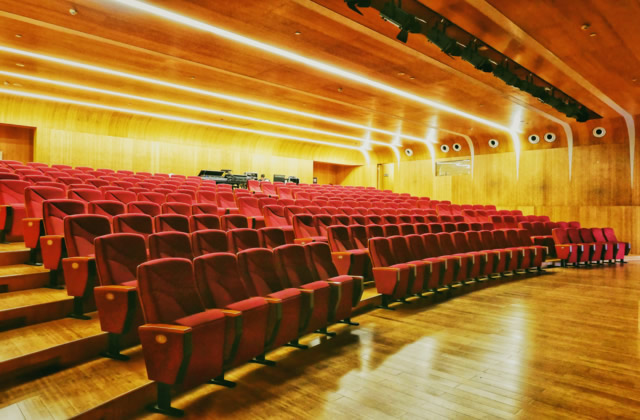
1、The sound absorption capacity varies depending on the material.
The sound absorption capacity of a single, uniform, and dense wall panel conforms to the "sound absorption quality law" of acoustics, which states that the sound absorption capacity is proportional to the weight of the component per unit area. For every doubling of the surface density, the sound absorption capacity increases by approximately 4-5 dB. When sound waves are projected onto the wall panel, heavier walls are less likely to generate vibrations, while lower frequencies are more easily excited than higher frequencies. Therefore, heavier walls are better at sound absorption, and higher frequencies are better at sound absorption than lower frequencies.
2、Applications of sound-absorbing materials
Placing sound-absorbing materials within the air cavity of a double-wall construction will further enhance the sound insulation performance of the double-wall. Furthermore, the thicker the sound-absorbing material, the better its sound absorption properties, and the more significant the increase in sound insulation.
Placing sound-absorbing materials within the air cavity of a double-wall structure results in a more noticeable effect, particularly for lightweight double-wall structures, compared to heavier double-wall structures.
Two. What is the principle of sound absorption?
The principle of sound absorption relies on the ability of the sound-absorbing material to absorb sound waves and reflected waves generated in the space due to its inherent properties. Different types of sound-absorbing materials have varying absorption effects on different frequencies. For example, slot wood sound-absorbing panels have excellent absorption performance for mid and high frequencies, while fabric-covered sound-absorbing panels provide better sound-dampening effects for mid and low frequencies. The primary function of sound-absorbing panels is to absorb sound and weaken sound waves, ultimately achieving sound absorption and noise reduction.